


Theme:
Which cost items are most often overlooked in a TCO analysis?
Hidden packaging costs such as damages and return logistics are often missing from a TCO analysis — discover the blind spots.
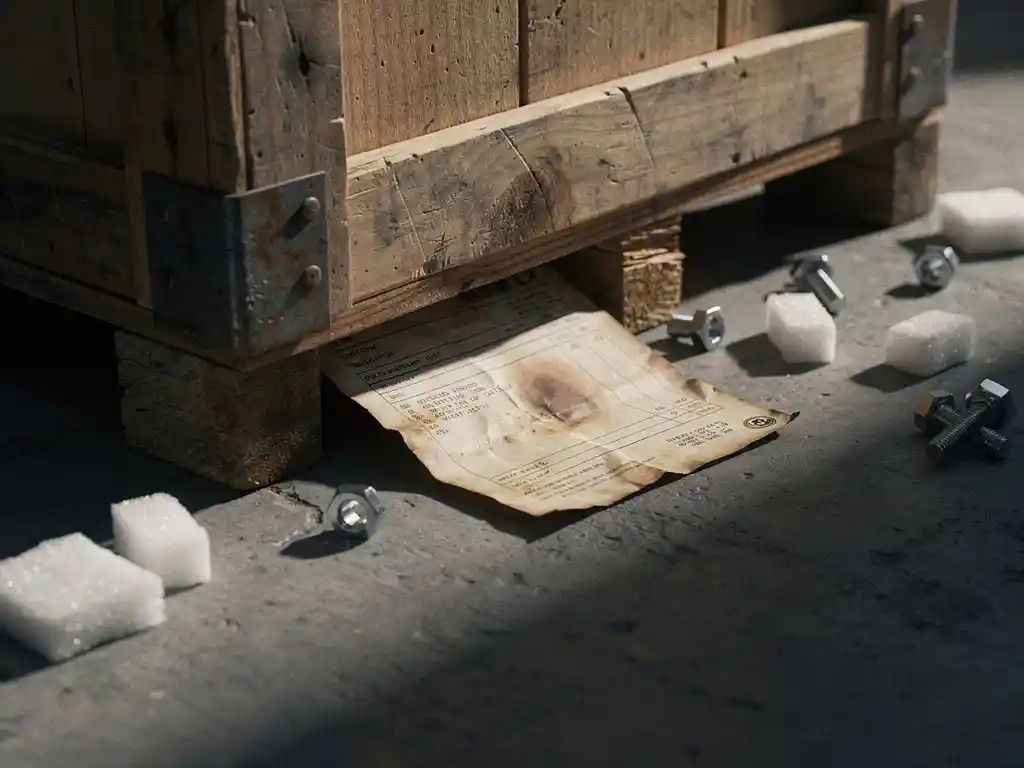
Hidden packaging costs such as damages and return logistics are often missing from a TCO analysis — discover the blind spots.
The most commonly overlooked cost items in a TCO analysis are damages, return logistics, engineering costs, storage space, and the hidden costs of single-use packaging. When making packaging decisions, companies tend to focus on the purchase price, while the true costs over the entire lifecycle can be a multiple of that figure. This article covers the most significant blind spots in a TCO analysis for industrial packaging.
Beyond the purchase price, costs include storage, maintenance, repairs, labor for packing and unpacking, inspection costs, documentation, and waste disposal. In practice, these indirect cost items are often greater than the initial purchase price — especially for packaging that goes through multiple transport cycles or must comply with strict regulations.
Packaging is not a standalone product; it is part of a larger logistics system. Consider a custom case used to transport precision instruments. The purchase price appears on the invoice, but the costs of training staff, maintaining an inspection protocol, storing empty packaging, and disposing of decommissioned units do not. Yet those costs are real and recurring.
In sectors such as defense, medical technology, and high-tech manufacturing, additional costs come into play: compliance documentation, certification requirements, and traceability records. Packaging that must meet UN, NEN, or MIL-STAN standards carries administrative burdens that rarely appear in an initial cost calculation.
Damages and return flows increase total packaging costs in two ways: directly, through damage to products and packaging, and indirectly, through additional handling, delays, and administration. In sectors where products have high value or fulfill critical functions, the cost of a single damage incident can exceed the purchase price of dozens of packaging units.
When a component of a medical device or a precision part arrives damaged, you are not only paying for a replacement. You are paying for downtime, emergency procedures, additional transport, customer service, and reputational damage. A TCO analysis that ignores damage risk will systematically underestimate the true cost of packaging.
Return flows are a second blind spot. Many companies calculate the cost of packaging based on the outbound journey, forgetting that return packaging must be collected, inspected, cleaned, repaired, and stored. Without a structured return logistics system, these costs escalate quickly — especially at high volumes or with international shipments.
A well-designed reusable packaging solution with a clearly defined return process reduces the risk of damage and makes the return journey manageable. This requires an upfront investment in design and logistics, but delivers significant savings over multiple cycles.
The hidden costs of single-use packaging include waste disposal, more frequent purchasing, quality degradation per shipment, and higher damage risks due to less robust construction. Reusable packaging has higher upfront costs, but lower costs per cycle, less waste, and better protection of the contents over its entire lifespan.
With single-use packaging, you pay for materials, production, and logistics every single time. That may seem inexpensive per unit, but at high frequency or large volumes, costs accumulate quickly. Furthermore, single-use packaging generates waste streams that, heading into 2026, are increasingly subject to environmental regulations and waste disposal fees.
Reusable packaging requires a different approach to calculation. The investment is higher upfront, but is spread across dozens or hundreds of use cycles. It also typically offers better protection, is designed for specific products, and fits within a circular packaging system built around repair and reuse.
The real comparison is therefore not the purchase price of single-use versus reusable packaging, but the total cost per transport cycle including all associated items. When that calculation is made, the result is, in most cases, a clear advantage for reusable solutions in structural, repetitive transport flows.
The most frequently overlooked logistics cost items are storage space for empty packaging, handling during loading and unloading, volumetric weight in freight calculations, and the costs of inefficient stackability. These items are rarely visible in a standard packaging quote, yet they have a direct impact on total logistics costs.
Volumetric weight is a good example. Air freight costs are calculated based on whichever figure is greater: actual weight or volumetric weight. Packaging that is larger than necessary will consistently cost more to ship by air, regardless of what is inside. For repeated international shipments, this quickly adds up to significant amounts.
Stackability is a second underestimated factor. Packaging that cannot be stacked optimally fills a pallet or container less efficiently. That means more trips, more space, and higher transport costs per unit. Digital tools such as StackAssist help optimize loading patterns, but that advantage disappears if the packaging itself has not been designed to optimal dimensions.
Handling at both ends of the transport chain is also rarely factored in. Packaging that is difficult to open, close, or carry costs labor minutes at every step. At high volumes, this becomes a recurring cost item that feeds directly into the total logistics bill.
Engineering and design costs are best treated as a one-time investment that is amortized over the total number of use cycles or the expected lifespan of the packaging. The more cycles a packaging solution goes through, the lower the engineering cost per use becomes, and the greater the return on the initial investment.
Many companies leave these costs entirely out of the TCO calculation because they are booked as project costs rather than as a packaging investment. This distorts the picture. If packaging has been specifically designed for a product, the engineering costs are just as much a part of the total packaging cost as the materials and production.
For complex packaging used with sensitive or high-value products — such as in the medical or defense sector — good engineering is actually a cost-saving measure. Packaging that has been optimized during the design phase for protection, weight, and stackability reduces transport costs, damage, and repairs over the entire lifecycle. The engineering costs pay for themselves.
In practice, you can incorporate engineering costs into a TCO analysis by dividing them by the expected number of use cycles and adding the result to the cost per use. This way, you are comparing like with like when evaluating different packaging options side by side.
A full TCO analysis makes sense when packaging is used on a structural basis for repeated shipments, when the value or fragility of the contents is high, or when you suspect that current packaging costs are higher than necessary. For occasional use or low volumes, the cost of the analysis does not always outweigh the potential savings.
In practice, the threshold is lower than many companies assume. If you are sending more than a few hundred shipments per year using the same or similar packaging, a TCO analysis is almost always worthwhile. The analysis makes invisible costs visible and gives you the information needed to make better purchasing decisions.
Specific situations where a TCO analysis is particularly valuable:
A TCO analysis is also a strategic tool. It not only helps you reduce costs, but also supports internal decision-making and enables you to evaluate suppliers against the right criteria.
Faes maps all cost items that are absent from a standard packaging quote. Drawing on years of experience in high-tech, medical, and defense sectors, Faes knows exactly where hidden costs arise and how to reduce them structurally. That process starts at the design stage and extends through to return logistics and inventory management.
What Faes offers for a TCO-driven approach:
Faes’ packaging management service ensures that your packaging process is fully optimized, including all cost items that typically remain out of sight. Want to know what your packaging truly costs and where the greatest savings can be found? Contact Faes for a tailored TCO analysis.


Robert Verboven is Sales Manager at Faes and advises customers on smart packaging solutions within the industry. He translates complex packaging needs into practical solutions that contribute to a more efficient supply chain.
More articles by Robert VerbovenGood packaging doesn’t happen by chance. Using a proven process, our specialists guide you step by step from the initial idea to the final product.