


Theme:
What role do return flows play in the total cost of ownership of the supply chain?
Return flows cost more than you think — discover which hidden TCO costs are impacting your supply chain.
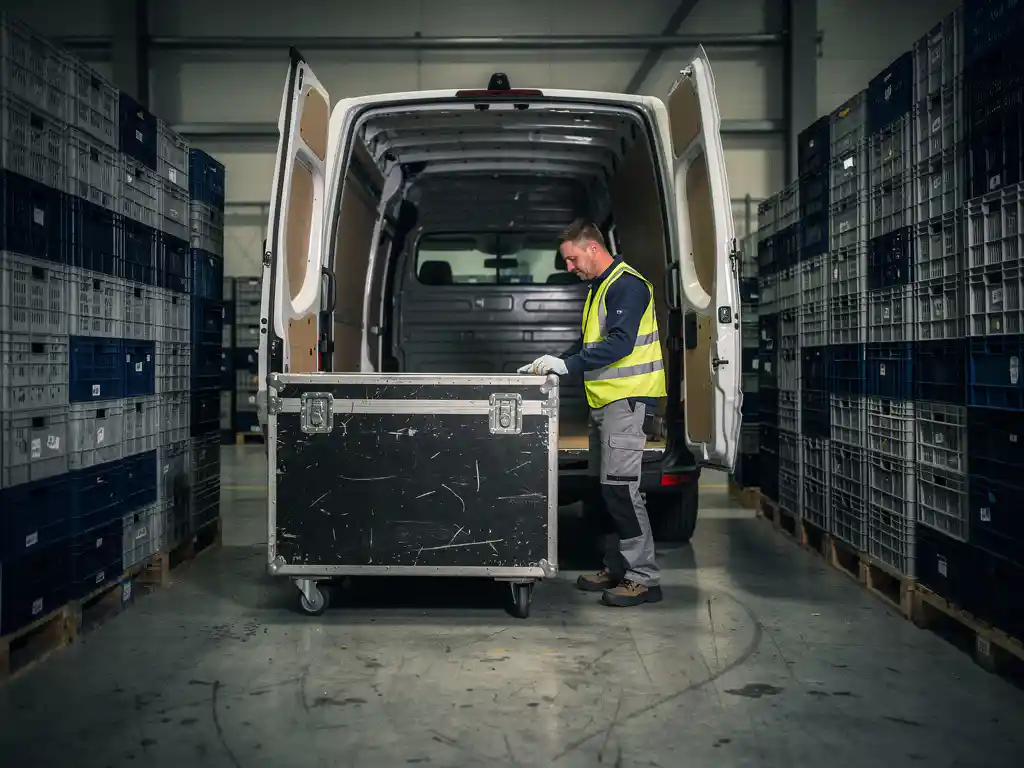
Return flows cost more than you think — discover which hidden TCO costs are impacting your supply chain.
Return flows have a far greater impact on your supply chain’s total cost of ownership than most companies realize. Direct transportation costs are visible, but the real impact lies in hidden costs such as damaged products, inefficient packaging, administrative overhead, and lost productivity. For industrial companies working with expensive, sensitive equipment, return flows are a strategic priority — not an afterthought. This article answers the most frequently asked questions about return flows, packaging choices, and TCO optimization in the supply chain.
A poorly managed return flow generates costs on multiple levels simultaneously: direct transportation costs, damaged or lost products, administrative processing time, storage costs for return packaging, and the indirect costs of customer dissatisfaction and reputational damage. Together, these hidden cost factors can easily exceed the initially visible logistics costs.
When it comes to return flows, many companies look only at freight costs. That is understandable, since those figures appear clearly on the invoice. But the true cost structure is far more complex. When a product comes back in damaged or unsuitable packaging, a chain of costs begins:
In the industrial and defense sectors, these costs are felt particularly acutely. Equipment returned after a mission or clinical deployment must be reliably ready for reuse quickly. When packaging fails to support that, downtime increases and TCO rises — without ever appearing in the packaging budget.
Packaging choice directly determines your supply chain TCO by influencing the level of protection, return potential, storage efficiency, and the service life of the packaging itself. A cheaper single-use option may appear more economical, but it consistently leads to higher costs through damage, replacement, and inefficient return processing.
Packaging choice is one of the most underestimated variables in TCO calculations. Companies often compare only the purchase price of packaging materials, while the real impact spreads across the entire logistics chain. Consider the following effects:
For companies working with high-value components, medical equipment, or defense materiel, packaging choice is not an operational detail — it is a strategic decision. The investment in the right custom industrial packaging pays for itself through lower damage costs, reduced return processing, and longer usage cycles.
Reverse logistics is the broader process of moving products, materials, or packaging from the end user back to the supplier or manufacturer, with the goal of reuse, repair, recycling, or disposal. Return flows are a component of reverse logistics and refer specifically to the physical movement of goods back through the supply chain.
The distinction matters for TCO analysis. Reverse logistics encompasses all activities surrounding returned goods: logistics planning, inspection, sorting, reworking, storage, and processing of returned products. Return flows describe the flow itself, not the management processes surrounding it.
In practice, this means a company can have a clear picture of its return flows while still incurring high costs if its reverse logistics is poorly structured. Conversely, a company with low return volumes can still face high TCO costs if the processing of that small flow is inefficiently organized.
For industrial companies using reusable packaging, managing reverse logistics is especially important. The packaging itself is an asset that must be returned, inspected, repaired, and redeployed. That requires a structured system — not just a return address.
The true cost of return flows is calculated by adding up all direct and indirect costs per return cycle: round-trip transportation costs, processing time, inspection and repair costs, storage costs, administrative overhead, and the depreciation or write-off of damaged goods. Many companies miss half of these items in their calculations.
A complete TCO calculation for return flows works with the following cost components:
By mapping these cost items per return cycle and multiplying them by the annual return volume, you get a realistic picture of the true impact on your supply chain TCO. Only then can you make meaningful comparisons between packaging options or logistics strategies.
Investing in reusable packaging pays off when the number of usage cycles is high enough to offset the higher initial investment through lower cost per cycle. As a rule of thumb: with five or more return cycles per year and a reasonable packaging service life, the TCO of reusable packaging is almost always lower than that of single-use alternatives.
The business case for reusable packaging depends on a number of concrete factors:
A fair comparison looks not only at the purchase price, but at the total cost over the full service life of the packaging, including maintenance, storage, and end-of-life processing. Sustainable packaging solutions consistently outperform single-use alternatives in this regard.
Packaging design directly determines how efficiently packaging moves through the return cycle. Well-designed packaging is easy to close, stack, inspect, and reuse. Poor design leads to longer processing times, more damage in transit, and a shorter service life — all of which increase the TCO per cycle.
Designing for return logistics starts with the question: what does the full lifecycle of this packaging look like? That includes not only the initial shipment, but also unpacking, returning, inspecting, and repacking. Relevant design principles include:
In sectors such as high-tech, medical, and defense, these design choices are not a luxury — they are a necessity. Equipment returned after field use must be repacked quickly and reliably, even under time pressure and by people who are not packaging specialists.
Companies make return flows measurable by defining fixed KPIs for return volume, processing time, damage rate, and cost per cycle, and linking these to a tracking system. Return flows only become manageable when that data also drives concrete process improvements in packaging choice, logistics planning, and inventory management.
Moving from measurement to control requires a structured approach. Practical elements include:
Digital tools are playing an increasingly important role here. Systems that track packaging throughout the entire cycle — from shipment to return and reuse — give companies the data they need to make targeted improvements. This transforms packaging management from a cost item into a controllable part of the supply chain strategy.
Faes offers a comprehensive approach for companies looking to turn their return flows from a cost item into a manageable and efficient part of the supply chain. That starts with packaging design and extends to full process optimization, including return logistics and inventory management.
Specifically, Faes offers the following:
Want to know what a better approach to return flows can concretely deliver for your supply chain TCO? Explore the packaging management services offered by Faes and discover how a structured approach to packaging management reduces costs, improves efficiency, and supports sustainability goals. Get in touch for a no-obligation conversation about the possibilities for your organization.


Robert Verboven is Sales Manager at Faes and advises customers on smart packaging solutions within the industry. He translates complex packaging needs into practical solutions that contribute to a more efficient supply chain.
More articles by Robert VerbovenGood packaging doesn’t happen by chance. Using a proven process, our specialists guide you step by step from the initial idea to the final product.