


Theme:
How do NATO packaging requirements for hazardous materials differ from those for standard equipment?
NATO packaging requirements for hazardous materials go beyond standard military equipment — discover the crucial differences.
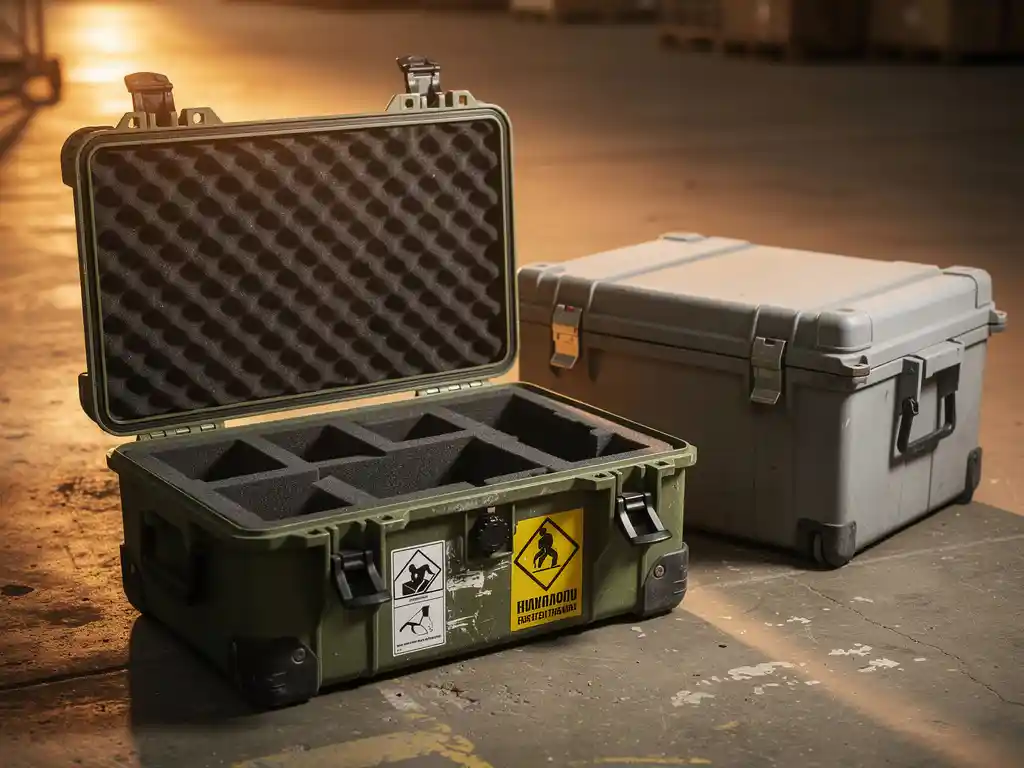
NATO packaging requirements for hazardous materials go beyond standard military equipment — discover the crucial differences.
NATO packaging requirements for hazardous materials are significantly stricter than those for standard military equipment. While standard defense materiel primarily needs to be protected against physical damage and environmental influences, hazardous materials are subject to additional requirements covering containment, leak prevention, chemical resistance, and transport classification. These distinctions apply to all NATO member states and are established in both international UN standards and specific STANAG standards. This article answers the most frequently asked questions on this topic, from classification to documentation.
NATO regulations for hazardous materials cover all substances that pose a risk to people, equipment, or the environment during transport or storage. This includes explosives, flammable liquids and gases, toxic and corrosive substances, radioactive materials, oxidizing agents, and environmentally hazardous substances. The classification aligns with the nine UN hazard classes, which also serve as the basis for defense logistics.
In practice, defense environments involve a wide range of materials. These include fuel for vehicles and generators, ammunition and pyrotechnic devices, batteries (including lithium-ion batteries in drones and communications equipment), chemical cleaning agents, hydraulic fluids, and specific lubricants. Gases such as nitrogen or oxygen carried for medical or technical applications also fall under these regulations.
Importantly, NATO regulations consider not only the substance itself, but also the quantity, packaging type, and transport route. A small quantity of a hazardous substance may fall below an exemption threshold, while larger volumes or combined loads are immediately subject to full regulatory requirements. This makes classification a critical first step in the packaging process.
The fundamental difference is that packaging for hazardous materials must not only protect the contents, but also protect the surrounding environment from the contents. With standard military equipment, the focus is on shock absorption, water resistance, and climate protection. For hazardous materials, additional requirements apply regarding the chemical resistance of the packaging material, leak-proof construction, pressure venting, and specific closure mechanisms.
Standard military packaging is often made from wood, aluminum, or high-grade plastic, primarily optimized for strength and weight. Packaging for hazardous materials must also be resistant to the chemical properties of the contents. A drum containing a corrosive liquid requires a different material than a case for electronics. Inner linings, seals, and closures must be specifically approved for the relevant hazard class.
Standard defense packaging is tested for drop, vibration, stack loading, and climate resistance in accordance with MIL-STAN standards. Packaging for hazardous materials undergoes additional tests: pressure tests, leak tests, stacking tests at elevated temperatures, and in some cases fire tests. Only after successful test results does a package receive the required UN marking, which is a legal prerequisite for transport.
For standard military equipment, labeling is primarily focused on identification and handling instructions. For hazardous materials, labeling is legally required and standardized: hazard pictograms, hazard category, UN number, substance name, and emergency contact details must all be visibly present. These requirements apply regardless of whether transport takes place by road, rail, sea, or air.
Two regulatory frameworks govern hazardous military packaging: the UN Recommendations on the Transport of Dangerous Goods (known as the “Orange Book”) and the relevant NATO STANAG standards. The UN standards form the international foundation; the STANAG standards supplement these with military specifications and operational requirements not found in civilian regulations.
The most relevant STANAG standards are STANAG 2828, which covers the movement of dangerous goods within NATO, and STANAG 4441, which specifically addresses the storage and transport of ammunition and explosives. STANAG 4107 is also significant, as it governs the mutual acceptance of government approvals for defense materiel, including packaging.
In addition to NATO standards, the modal-specific UN conventions also apply in practice: ADR for road transport, RID for rail transport, IMDG for sea freight, and IATA DGR for air freight. Each of these conventions imposes additional requirements on packaging construction, marking, and documentation. For multimodal transport — which is common in defense logistics — packaging must comply with the most stringent of the applicable standards.
The mode of transport largely determines which additional requirements apply on top of the baseline standards for hazardous materials. Air transport has the strictest requirements due to pressure differentials, temperature fluctuations, and the consequences of an incident at altitude. Sea freight places high demands on corrosion resistance and stability during prolonged exposure to humid conditions. Road transport primarily requires mechanical strength and leak-tightness under shock and vibration.
For air transport, the IATA Dangerous Goods Regulations serve as the governing standard. Packaging must withstand pressure loss in the cargo hold and must not contain substances that could dangerously expand or leak under reduced pressure. Lithium-ion batteries, which are widely used in drones and military communications systems, are subject to particularly strict restrictions regarding charge level, packaging size, and quantity per shipment.
Sea freight falls under the IMDG Code, which classifies packaging into packing groups based on hazard level. Containers carrying hazardous materials must follow specific stowage and segregation rules. For road transport under ADR, tunnel restrictions and parking regulations are relevant in addition to the packaging requirements themselves. In a NATO context, combined civilian-military transport routes may also be involved, in which case both regulatory frameworks apply simultaneously.
Standard defense materiel falls under hazardous materials regulations as soon as it contains built-in or attached components that are themselves classified as hazardous. This also applies when the materiel is not hazardous on its own but is transported together with hazardous substances in the same transport unit. The presence of lithium-ion batteries, pyrotechnic elements, or pressurized systems is the most common reason for this.
Concrete examples include drones with integrated lithium-ion batteries, vehicles with a full fuel tank, communications systems with built-in emergency lighting based on hazardous chemicals, and medical equipment with oxygen cylinders. Once any of these components is present, the associated packaging, labeling, and documentation requirements apply — even if the remaining materiel is entirely standard.
A practical consideration is the so-called “contained in equipment” exemption offered by some regulatory frameworks. Batteries that are permanently installed in equipment may, under certain conditions, be transported without the full hazardous materials procedure, provided that specific requirements are met regarding protection against short circuits and the equipment is not in use. However, these exemptions are modal-specific and do not always apply to air transport.
Documentation for the transport of hazardous military packaging is legally required and forms an integral part of the shipment. The minimum requirements include a transport document stating the official UN name of the substance, the UN number, the hazard class, the packing group, the quantity, and the name and address of the sender and recipient. For international shipments, customs documents and any required export licenses are also required.
Within the NATO context, additional documentation requirements apply. STANAG 2828 stipulates that military dangerous goods must be accompanied by a NATO Dangerous Goods Declaration, which contains additional information about the military classification of the materiel and the responsible officer. For shipments crossing the borders of NATO member states, coordination with the national authorities of the receiving country is also required.
In addition to the transport document, the following documents are required or strongly recommended in most cases:
Documentation must be current, complete, and accessible throughout the entire transport. Missing or incorrect documents can result in the shipment being held, fines, or in serious cases, criminal liability for the responsible individuals.
Packaging for hazardous military materials requires specialized knowledge of both the technical and regulatory aspects. Faes combines more than 35 years of experience in custom industrial packaging with in-depth expertise in the defense sector, including knowledge of MIL-STAN, STANAG, and UN standards. That expertise makes the difference when dealing with complex packaging challenges where regulatory compliance and technical protection intersect.
What Faes offers defense clients in concrete terms:
Whether you need to safely transport drones, communications systems, or other mission-critical equipment, Faes is involved from the initial design through to delivery. View Faes defense packaging solutions and get in touch for a no-obligation consultation about your specific situation.


Robert Verboven is Sales Manager at Faes and advises customers on smart packaging solutions within the industry. He translates complex packaging needs into practical solutions that contribute to a more efficient supply chain.
More articles by Robert VerbovenGood packaging doesn’t happen by chance. Using a proven process, our specialists guide you step by step from the initial idea to the final product.