


Theme:
What is the difference between military packaging for air and ground transport?
Air transport demands lightweight precision, ground transport demands rugged shock resistance — discover which military packaging protects your mission.
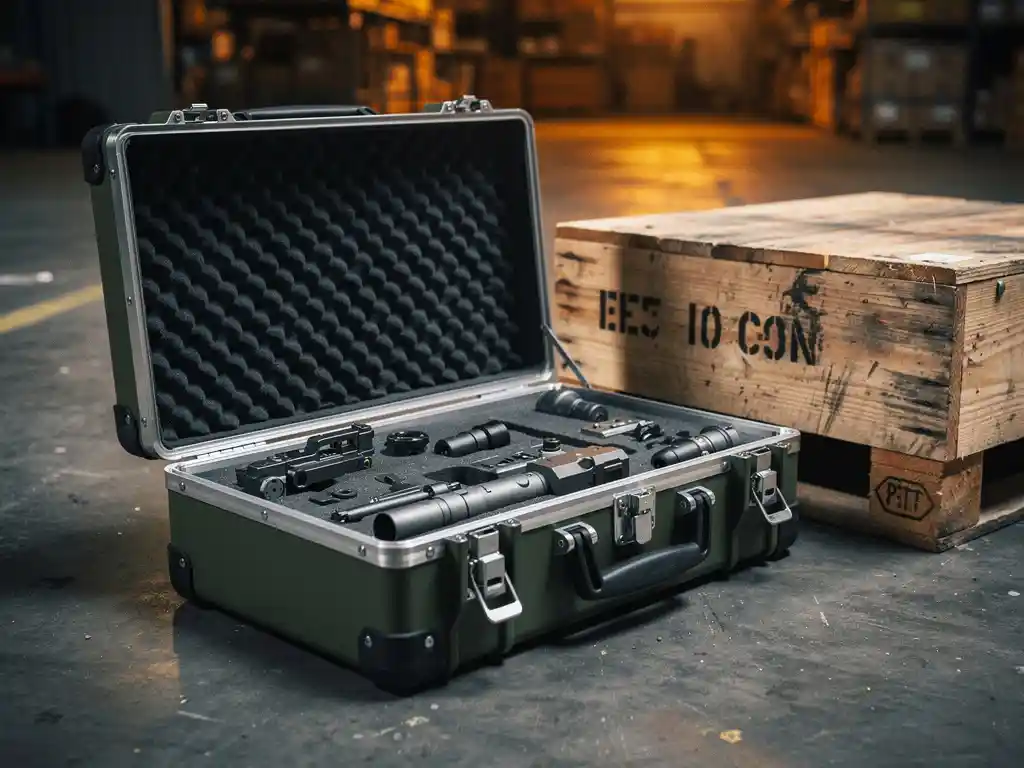
Air transport demands lightweight precision, ground transport demands rugged shock resistance — discover which military packaging protects your mission.
Military packaging for air transport and ground transport differs fundamentally. Air transport imposes strict weight and pressure differential restrictions, while ground transport demands resistance to continuous vibration and heavy mechanical shock. The type of packaging you need depends entirely on the transport route, the equipment being protected, and the applicable military standards. In this article, we answer the most frequently asked questions about both packaging types.
Air transport places different — and in many respects stricter — demands on military packaging than ground transport. The packaging must withstand pressure differentials in the cargo hold, extreme temperature fluctuations, and the specific vibration profiles generated by aircraft engines. In addition, hard limits apply to weight and dimensions, and every shipment must comply with international aviation regulations.
The most critical factors in air transport are:
Aluminum or composite flight cases are the most widely used solution for air transport. They combine low weight with high strength and provide excellent protection for sensitive military equipment such as communications systems, drones, and optical instruments.
Ground transport places mechanical robustness at the forefront. Military packaging for ground transport must withstand continuous vibration on rough terrain, heavy shocks during loading and unloading, and the extreme conditions of operational environments. Weight plays a less dominant role, but packaging must still remain manageable for logistics teams in the field.
The primary requirements for ground transport are:
Wooden transport crates, steel frames, and rugged polyethylene cases are commonly used solutions for ground transport. They are heavier than air transport packaging, but offer greater mechanical strength and are easier to repair in the field.
The most significant technical differences between military packaging for air transport and ground transport lie in material selection, weight, shock dampening profile, and the specific environmental factors each must guard against. Both types must protect mission-critical equipment, but the nature of the stress they face differs fundamentally.
Air transport packaging is designed using the lightest possible materials: aluminum, high-grade plastics, and lightweight composites. Every gram saved reduces transport costs and increases load capacity. Ground transport packaging can be heavier and more frequently makes use of steel, solid wood, or thick-walled polyethylene, as robustness and repairability take priority over weight.
The vibration profile of an aircraft differs substantially from that of a military ground vehicle. Aircraft generate high-frequency vibrations through engines and aerodynamic forces, while ground vehicles produce low- and mid-frequency vibrations from road surfaces and terrain. The foam interior and dampening systems in military packaging must be specifically tuned to the expected vibration profile. An interior optimized for air transport does not automatically provide optimal protection for ground transport, and vice versa.
In air transport, protection against pressure differentials and temperature fluctuations is the priority. In ground transport, the focus shifts to waterproofing, dust resistance, and protection against direct mechanical impact. The sealing requirements and the choice of gasket and closure materials therefore differ between the two applications.
Yes, a combined military package designed for both air and ground transport is possible, but it requires a careful engineering process. Such dual-use packages combine a lightweight construction with sufficient mechanical robustness, and a foam interior that protects against multiple vibration and shock profiles. The challenge lies in finding the right balance: too heavy and the package becomes unsuitable for air transport; too light and ground transport protection falls short.
When designing a dual-use military package, the following aspects are critical:
Dual-use packages are more expensive to develop than single-purpose solutions, but they deliver logistical advantages: fewer packaging types to stock, simpler procedures, and greater flexibility when planning transport routes.
Military transport packaging is subject to specific certifications and standards that depend on the type of transport, the nature of the cargo, and the requirements of the contracting authority. The most relevant standards are MIL-SPEC standards, UN certifications for hazardous materials, and in some cases NEN standards for the Dutch market.
The most important certifications are:
The specific certifications required are typically outlined in the tender documents or the program of requirements issued by the contracting authority. It is essential to verify these before beginning the design process, as certifications directly influence material selection, construction methods, and testing procedures.
Choosing the right military packaging comes down to four core questions: what are you transporting, how will it be transported, under what conditions, and which standards apply? By systematically answering these questions, you arrive at a packaging concept suited to the specific transport scenario.
Use the following step-by-step approach as a guide:
For complex transport scenarios, always consult a packaging engineer with experience in the defense sector. The combination of technical expertise and knowledge of applicable military standards is essential to arriving at a solution that both protects the equipment and meets all requirements.
Faes designs and manufactures military packaging for both air and ground transport, fully customized and in line with applicable MIL-STAN, UN, and NEN standards. As a specialist in the defense sector, Faes understands that mission-critical equipment leaves no room for compromise. Every project begins with a thorough analysis of the transport route, the equipment, and the applicable standards, followed by an engineering process that results in packaging that does exactly what is required.
What Faes offers defense customers:
Want to find out which military packaging is right for your specific transport scenario? Explore the defense solutions offered by Faes or get in touch directly for a no-obligation consultation with one of our packaging engineers.


Robert Verboven is Sales Manager at Faes and advises customers on smart packaging solutions within the industry. He translates complex packaging needs into practical solutions that contribute to a more efficient supply chain.
More articles by Robert VerbovenGood packaging doesn’t happen by chance. Using a proven process, our specialists guide you step by step from the initial idea to the final product.