


Theme:
How does MIL-STD packaging relate to NATO packaging requirements?
MIL-STD vs. NATO standards: discover the crucial differences and when each packaging requirement applies.
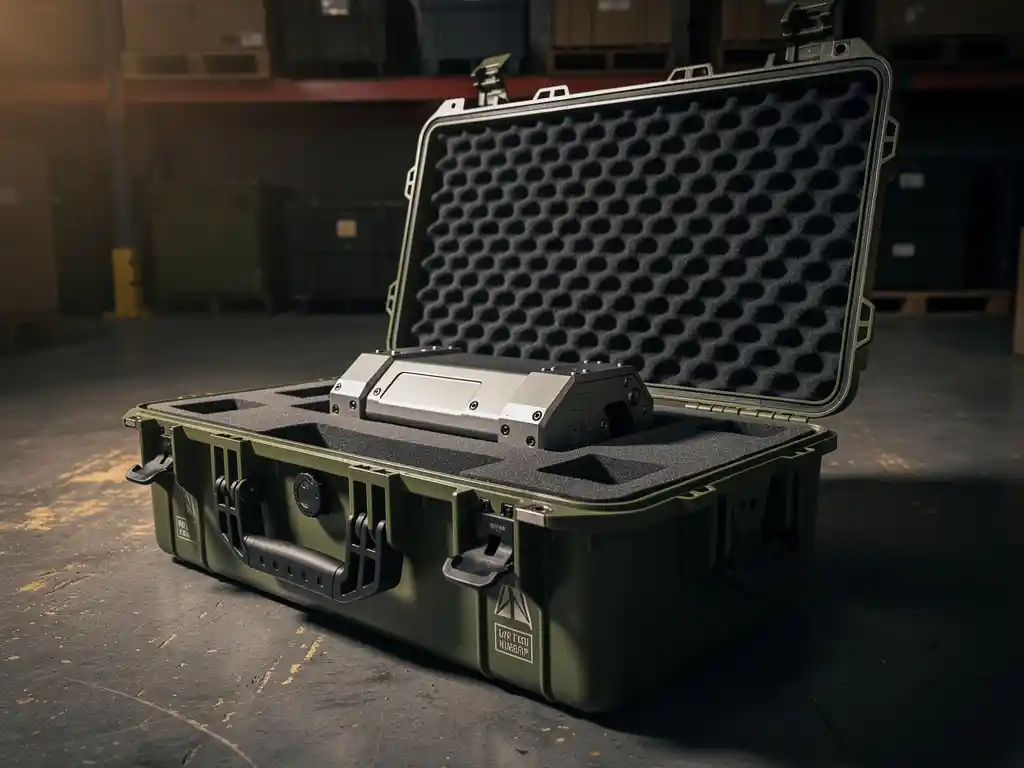
MIL-STD vs. NATO standards: discover the crucial differences and when each packaging requirement applies.
MIL-STD packaging and NATO packaging requirements overlap in part, but they are not the same. MIL-STD standards are American military standards developed by the U.S. Department of Defense (DoD), while NATO requirements are codified in STANAG documents that apply to all member states of the alliance. For defense organizations that operate or collaborate internationally, it is crucial to understand which standard applies when and how the two systems relate to each other.
In this article, we answer the most frequently asked questions about MIL-STD and NATO standards for military packaging, from the core differences to the practical design of packaging that meets both sets of requirements.
The most significant difference lies in their origin and scope. MIL-STD standards are developed by the U.S. DoD and are primarily intended for the U.S. armed forces and their direct suppliers. NATO standards, codified in STANAG documents (Standardization Agreements), are multilateral and apply to all 32 member states of the alliance. While MIL-STD is binding for American contractors, STANAG standards operate through national implementation.
A second important difference is the level of detail. MIL-STD standards are generally highly detailed and prescriptive: they specify exactly which materials, test procedures, and tolerances are permitted. STANAG standards tend to be more functional in nature. They define the desired outcome — such as interoperability or protection level — but leave more room for national interpretation.
Finally, the update cycles differ. MIL-STD documents are centrally managed by the DoD and revised on a regular basis. STANAG standards require consensus among all member states before any change is implemented, which slows the process but also ensures broad support.
Several MIL-STD standards are particularly relevant to military packaging. The best known is MIL-STD-2073, the standard for military packaging procedures. This standard describes how products must be packaged for storage and transportation within the military logistics chain, including requirements for protection against moisture, corrosion, shock, and vibration.
Other relevant standards include:
Together, these standards form a comprehensive framework that covers not only the packaging itself but also the test procedures used to demonstrate that the packaging meets the specified requirements. For suppliers delivering to the U.S. military or to NATO partners, these standards are often contractually mandatory.
Within NATO, several STANAG standards apply to packaging and logistics. The most central is STANAG 4280, which describes the requirements for military packaging and storage, with an emphasis on interoperability between member states. In addition, STANAG 2826 is relevant for the marking and identification of military goods within the logistics chain.
For transport by land, sea, and air, additional STANAG standards apply that intersect with packaging requirements:
It is important to understand that not all STANAG standards have been implemented identically by every member state. The Netherlands has translated a number of STANAG standards into national NEN standards or integrated them into its own defense standards. This means that for projects involving the Dutch defense organization, you must always verify which national implementation applies.
Which standard applies depends primarily on the contracting authority and the contractual framework. MIL-STD requirements apply when you are supplying to the U.S. armed forces or to a company acting as a prime contractor for the U.S. military. NATO requirements via STANAG apply to joint NATO programs, deliveries to NATO structures such as the NSPA (NATO Support and Procurement Agency), or projects where interoperability between member states is a requirement.
In practice, there are three situations you may encounter:
For Dutch defense suppliers that also operate internationally, it is advisable to design packaging solutions capable of meeting both sets of standards. This prevents costly modifications later in the process.
MIL-STD and STANAG standards have a direct impact on every aspect of military packaging, from material selection to construction and the test procedures that must be completed. Packaging required to comply with MIL-STD-2073, for example, calls for specific barrier materials to protect against moisture and corrosion, certified foam interiors for shock absorption, and precise documentation of the packaging process.
Standards such as MIL-STD-1660 specify which types of wood and joining techniques are permitted for military crates. For electronic equipment, additional requirements apply regarding electrostatic discharge (ESD protection) and climate control. STANAG standards add interoperability requirements to these, such as standard pallet and load unit dimensions compatible with NATO transport assets.
Both MIL-STD and STANAG standards require that packaging be tested for performance. MIL-STD-3010 describes the test methods for drop, vibration, compression, and climate tests, among others. STANAG 4370 applies comparable test protocols to NATO materiel. Completing these tests is not only a contractual obligation — it is also the only way to demonstrate that packaging actually protects what it is designed to protect, even under extreme conditions.
Yes, MIL-STD and NATO requirements are compatible in most cases. The standards overlap on many fundamental points, as the United States has played a major role in the development of NATO standards. Packaging that fully meets the relevant MIL-STD standards will in practice often also meet the corresponding STANAG requirements, but this must always be verified on a project-by-project basis.
The key to compatibility lies in incorporating the standard requirements early in the design process. When you account for both MIL-STD and STANAG requirements during the engineering phase, you avoid conflicting specifications. Consider dimensions that align with NATO standard pallets, while the internal protection meets MIL-STD-2073. This approach makes the packaging broadly deployable within the NATO supply chain without modifications for individual member states.
Key considerations when combining both standards:
Faes.nl has years of experience designing and producing packaging for the defense sector, with both MIL-STD and NATO standards serving as the foundation. As a specialist in custom industrial packaging for mission-critical equipment, Faes understands what is at stake when sensitive military hardware needs to be transported.
What Faes offers defense customers:
Whether you are preparing a single delivery to the Dutch defense organization or supporting a multinational NATO program, Faes is involved from the very first specification. Explore Faes’s defense packaging solutions and get in touch to discuss how your project can best be protected.


Michel Prins is Account Manager at Faes and a specialist in Safety & Security. Thanks to his background at the Ministry of Defense and years of experience in the sector, he advises organizations on reliable packaging solutions for critical applications. He combines practical knowledge with technical expertise to package sensitive equipment safely and efficiently.
More articles by Michel PrinsGood packaging doesn’t just happen by chance. Using a tried-and-tested approach, our specialists guide you step by step from the initial idea to the finished product.