


Theme:
What steps do you go through in a TCO analysis for packaging?
Discover in 5 steps how a TCO analysis uncovers hidden packaging costs and enables smarter decisions.
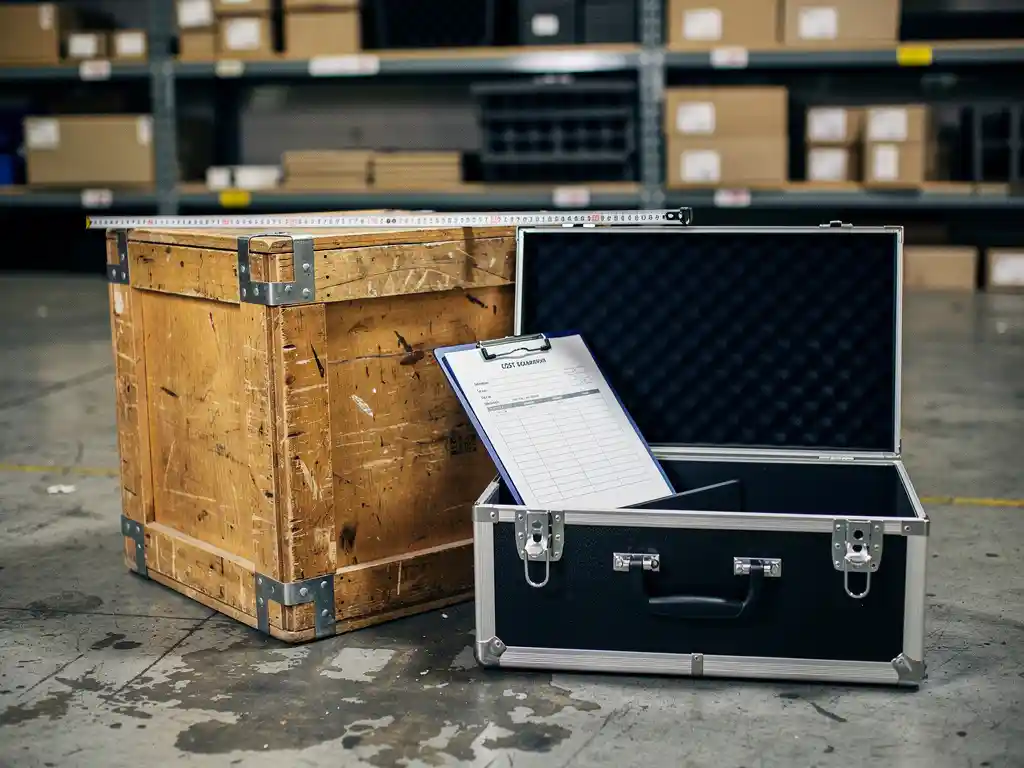
Discover in 5 steps how a TCO analysis uncovers hidden packaging costs and enables smarter decisions.
A TCO analysis for packaging involves five steps: identify all direct and indirect cost items, gather historical data on usage and damage, calculate lifecycle costs per packaging type, compare scenarios based on total costs, and make a decision based on facts rather than purchase price. This approach applies to any organization choosing between single-use and reusable packaging, or looking to optimize its packaging strategy. The sections below walk through each phase of the analysis in detail.
A TCO analysis for packaging covers all costs associated with a package throughout its entire lifecycle: acquisition, use, maintenance, storage, return logistics, and waste processing. Total cost of ownership therefore goes far beyond the purchase price alone. That broad perspective is precisely what makes a TCO analysis so valuable as a decision-making tool.
In practical terms, cost items can be broken down into three layers:
For industrial sectors such as high-tech, medical, and defense, additional sector-specific costs apply. These include costs for compliance with UN, NEN, or MIL-STAN standards, inspection costs, documentation, and any costs associated with cleanroom-compatible packaging of sensitive components. These items are rarely factored into a standard quotation process, yet in practice they can be significant.
The right data for a TCO calculation is gathered by systematically reviewing historical usage, damage, and logistics data from within your own organization. Without reliable input data, a TCO analysis will not produce a usable result. Start with what you already know before consulting external benchmarks.
A practical step-by-step approach:
If internal data is missing or incomplete, that in itself is a valuable insight. It means your packaging process lacks sufficient visibility, which poses a risk to cost management and quality assurance. In that case, it is advisable to conduct a baseline assessment before carrying out a full TCO calculation.
TCO and ROI are complementary but fundamentally different analytical tools. TCO, or Total Cost of Ownership, maps all costs over the lifecycle of a package. ROI, or Return on Investment, measures the return that an investment generates relative to its costs. In packaging decisions, you use TCO to understand what something costs, and ROI to assess whether the investment is worthwhile.
The difference lies in the direction of the analysis:
Suppose you are considering switching from single-use cardboard boxes to reusable industrial packaging. The TCO analysis shows that the reusable option is less expensive over three years, despite a higher upfront cost. The ROI calculation then tells you when the break-even point is reached and what the net benefit is over the full period of use.
In practice, both analyses are best developed in parallel. TCO gives you the complete cost structure; ROI helps you build the business case and generate internal support for investing in more expensive but smarter packaging solutions.
The lifecycle costs of reusable packaging are calculated by dividing the total acquisition and operational costs by the number of usage cycles. The more often a package is used without incurring additional costs, the lower the cost per use becomes. This makes the number of cycles the most decisive variable in the calculation.
The basic formula is as follows:
Cost per use = (Purchase price + total maintenance and repair costs + return logistics + disposal costs) / number of usage cycles
To apply this formula accurately, you need the following data:
One important caveat: the actual lifespan of reusable packaging depends heavily on the conditions in which it is used. An industrial flight case used in a controlled warehouse environment will last considerably longer than the same case regularly exposed to shocks, vibrations, or extreme temperatures. Always include a heavy-use scenario in your calculation alongside the baseline scenario.
The hidden costs most frequently overlooked in packaging decisions are the costs of product damage, the labor costs associated with packaging operations, and the costs of empty return packaging. These items rarely appear on a purchase invoice, yet in total they can exceed the purchase price of the packaging itself.
The most underestimated cost items, outlined below:
For organizations working with high-value products — such as companies in nanotechnology or the medical sector — these hidden costs can be the deciding factor in a make-or-buy decision or in the choice between packaging types.
A TCO analysis pays off as soon as a packaging decision has a significant impact on your operational costs, product quality, or logistical efficiency. For small, one-off shipments with low product values, the time invested in the analysis does not justify the benefit. For structural, recurring, or high-risk packaging flows, a TCO analysis is almost always worthwhile.
Specific situations in which a TCO analysis delivers a return:
In 2026, sustainability is playing an increasingly prominent role in packaging decisions. A TCO analysis offers a dual advantage in this context: it makes not only the financial costs transparent, but also the environmental impact of different scenarios. This allows you to justify a choice for circular packaging not only on principle, but also with hard data.
Faes supports organizations in the high-tech, medical, defense, and security sectors in conducting a comprehensive TCO analysis for their packaging. This does not start with a quotation, but with a thorough analysis of your current packaging process, logistics flows, and cost structure.
What Faes offers in concrete terms:
Want to know what a TCO analysis can deliver for your packaging strategy? Contact Faes for a no-obligation conversation and discover where the greatest optimization opportunities lie in your packaging chain.


Robert Verboven is Sales Manager at Faes and advises customers on smart packaging solutions within the industry. He translates complex packaging needs into practical solutions that contribute to a more efficient supply chain.
More articles by Robert VerbovenGood packaging doesn’t happen by chance. Using a proven process, our specialists guide you step by step from the initial idea to the final product.