


Theme:
How does TCO logistics help reduce waste in the supply chain?
TCO logistics reveals hidden costs in your supply chain — and shows where waste truly originates.
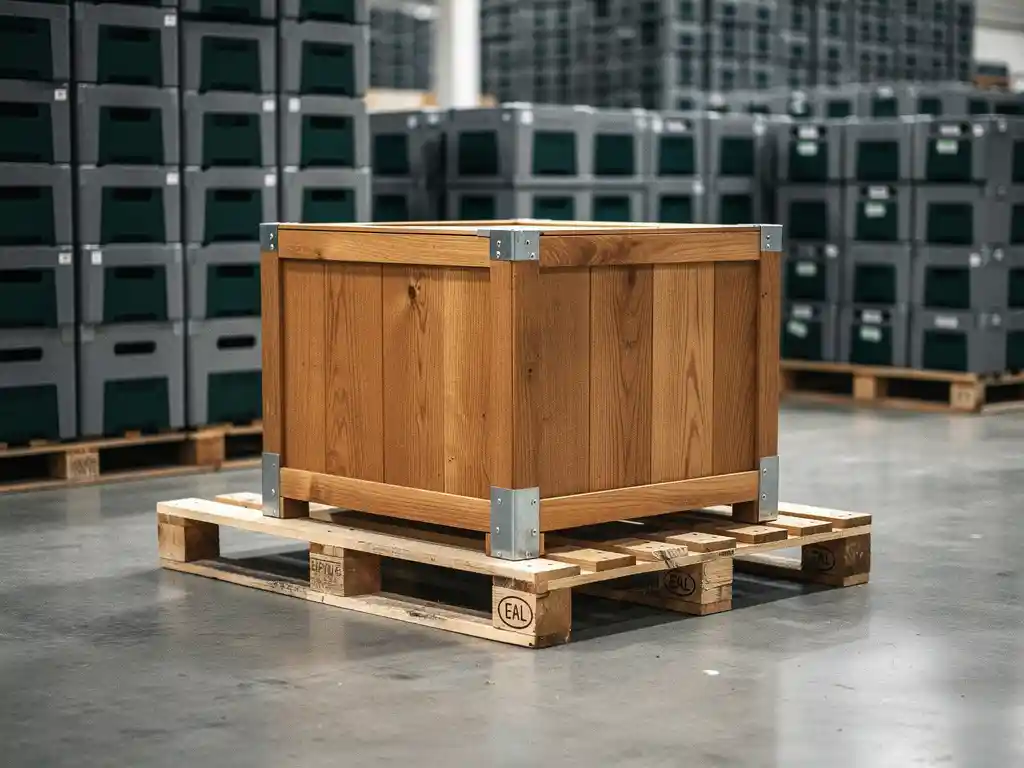
TCO logistics reveals hidden costs in your supply chain — and shows where waste truly originates.
TCO logistics helps reduce waste in the supply chain by mapping all costs across the full lifecycle of a packaging solution — not just the purchase price. This makes it possible to see exactly where money, materials, and time are lost to damage, return flows, storage, and waste. This article answers the most frequently asked questions about how to use TCO analysis in practice to eliminate waste.
Hidden costs in the supply chain arise in places that traditional procurement doesn’t measure: damaged products, unnecessary rework, inefficient storage, excess packaging materials, and unoptimized return logistics. These costs are responsible for a large share of waste in industrial supply chains, yet they rarely appear on an invoice.
A buyer who looks only at the price per package misses the full picture. Suppose a cheap single-use package fails to adequately protect a product during transit. You’re then paying not just for the packaging itself, but also for product damage, replacement, additional transportation, and employee time. That’s multiple layers of waste from a single decision.
The most common hidden cost drivers in the supply chain include:
For companies in high-tech, medical, or defense sectors, these hidden costs are especially significant. A damaged medical instrument or a defective precision component doesn’t just cost money — it can also jeopardize delivery timelines and quality certifications. TCO logistics makes these kinds of risks visible and quantifiable.
A company calculates TCO for logistics packaging by adding up all direct and indirect costs across the full lifecycle of a package: acquisition, use, maintenance, return logistics, and end-of-life disposal or recycling. The result is a complete picture that allows for a fair comparison between packaging solutions.
The calculation starts with acquisition costs, but doesn’t stop there. You also need to account for how often a package is reused, what maintenance is required, what its storage footprint is, and what the return flow looks like. Only once all these elements are included can you make a well-founded comparison between a cheaper single-use solution and a more expensive reusable alternative.
A complete TCO calculation for packaging includes at minimum the following elements:
Start by mapping your current packaging flow: how many packages do you use per year, how often are they reused, and where is the most value being lost? Then build a comparison scenario for alternative solutions. By running both scenarios over a three-to-five-year period, the advantage of a higher initial investment in durable packaging often becomes apparent quickly.
The difference between TCO and traditional procurement costs is that traditional procurement focuses on the purchase price of a product, while TCO accounts for all costs incurred throughout the full lifecycle. Traditional procurement costs are straightforward to measure; TCO requires more data but provides a far more accurate picture of actual costs.
In traditional procurement, the supplier with the lowest unit price wins. That may seem efficient, but it ignores what happens afterward. A package that is five dollars cheaper but needs replacing after just three shipments ends up costing more annually than a robust alternative that lasts ten times as long.
This distinction is particularly relevant for industrial supply chains where packaging is used intensively, travels long distances, or must meet strict requirements. In that context, the purchase price is only the tip of the iceberg. TCO logistics shifts the focus from “what does it cost to buy” to “what does it cost to use, manage, and ultimately dispose of.”
Another key difference: traditional procurement often encourages short-term thinking and siloed behavior between departments. TCO forces collaboration between procurement, logistics, operations, and finance, because the costs are spread across multiple departments. This leads to better decisions and a more coherent supply chain strategy.
Reusable packages reduce waste in the supply chain because they last through multiple transport cycles without being discarded, lowering both material waste and the cost per shipment. The more often a package is reused, the lower the effective cost per use and the smaller the environmental impact.
With single-use packaging, every shipment is a new cost: new materials, new production, new disposal. With reusable packaging, those costs are spread across dozens or even hundreds of cycles. That makes a significant difference in both total costs and the amount of waste the supply chain generates.
Reusable packaging contributes to less waste in several ways:
In sectors such as medical, defense, and high-tech, the quality of the packaging is also directly linked to the safety and integrity of the product. A reusable package designed specifically for a particular component consistently provides better protection than a generic single-use solution. This reduces the risk of damage, which in turn prevents costly repairs and delays.
TCO analysis delivers the greatest cost savings when packaging is used intensively, returns frequently within the supply chain, or when the costs of product damage and non-compliance are high. In these situations, hidden costs are greatest and the gains from an optimized approach are most visible.
There are specific situations in which TCO analysis is particularly valuable:
Companies that are just starting with TCO analysis often see the fastest gains with their most frequently used packaging types. Starting there allows you to collect data quickly, build a baseline for comparison, and generate support for a broader TCO approach across the rest of the supply chain.
Digital tools play a critical role in TCO-driven logistics by providing real-time visibility into packaging flows, usage, maintenance, and return logistics. Without data, TCO calculations are estimates; with the right tools, they become precise, decision-supporting analyses that can continuously improve your supply chain.
The power of digital tools lies in their ability to automatically collect and combine data that would otherwise need to be tracked manually — or simply wouldn’t be available at all. This includes tracking how many cycles a package has completed, when maintenance is due, where in the supply chain packages are located, and which types generate the highest cost per use.
Practical applications of digital tools in TCO logistics include:
As supply chains grow more complex and sustainability requirements increase, data-driven packaging management is becoming an ever greater competitive advantage. Companies that manage their packaging processes digitally can respond faster, plan more effectively, and demonstrate that their approach is both cost-efficient and sustainable.
Faes offers a complete end-to-end approach for companies looking to tackle waste in their supply chain through TCO logistics. As a specialized packaging partner for high-tech, medical, and defense sectors, Faes combines custom engineering with digital tools and circular packaging principles to structurally reduce total costs in your supply chain.
What Faes concretely offers through Packaging Management:
Where traditional packaging suppliers stop at delivery, Faes goes further. By managing and continuously optimizing the entire packaging process, Faes ensures that TCO analysis is not a one-time exercise but a structural part of your supply chain strategy. Want to find out what a TCO approach can deliver for your supply chain? Contact Faes and discover how smarter packaging leads to less waste and lower costs.


Robert Verboven is Sales Manager at Faes and advises customers on smart packaging solutions within the industry. He translates complex packaging needs into practical solutions that contribute to a more efficient supply chain.
More articles by Robert VerbovenGood packaging doesn’t happen by chance. Using a proven process, our specialists guide you step by step from the initial idea to the final product.