


Theme:
What are the benefits of TCO logistics optimization for large shipping volumes?
Reduce logistics costs at high shipping volumes with TCO optimization — looking beyond the purchase price alone pays off.
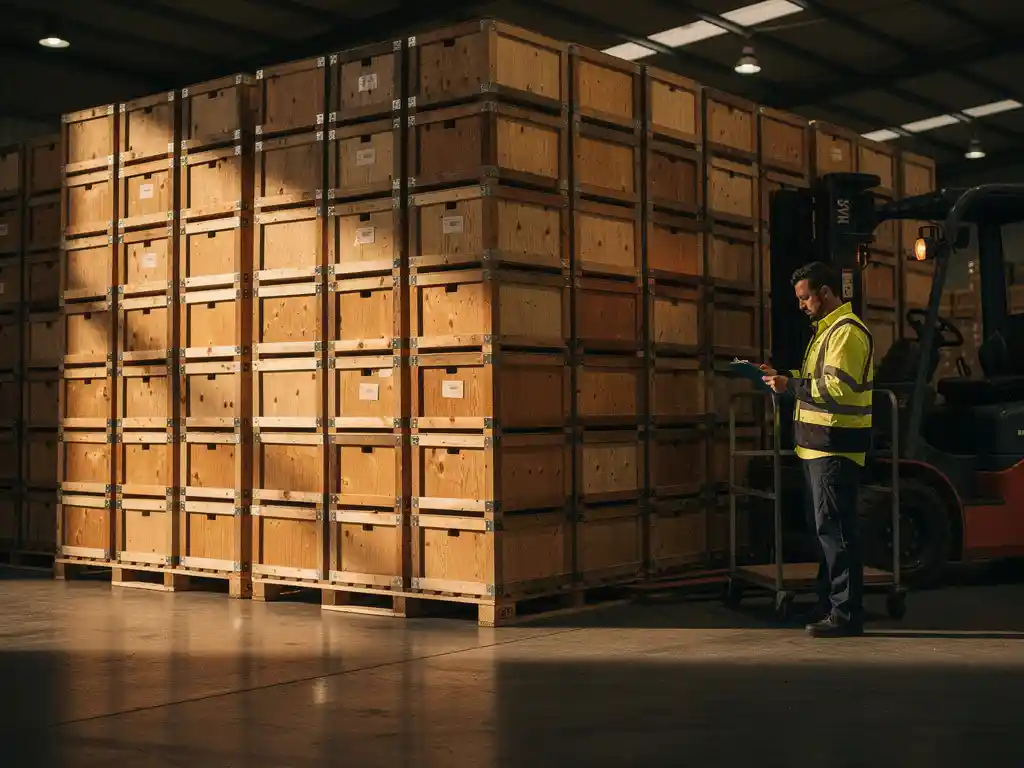
Reduce logistics costs at high shipping volumes with TCO optimization — looking beyond the purchase price alone pays off.
TCO logistics optimization reduces total logistics costs at high shipping volumes by looking beyond the purchase price of packaging alone. When you factor in every cost component — from transport and storage to repairs and return logistics — it quickly becomes clear that smart packaging choices have a direct impact on profitability. In this article, we answer the most frequently asked questions about TCO in logistics, so you know exactly where the savings can be found.
The Total Cost of Ownership (TCO) at high shipping volumes encompasses all costs associated with a packaging solution throughout its entire lifespan. That goes well beyond the purchase price. Think transport costs, storage space, packaging labor, goods damage, return logistics, repairs, and eventual disposal or recycling.
At low volumes, the difference between a cheap and a more expensive packaging solution is still manageable. But at high shipping frequencies, all those small cost components add up quickly. A package that is inexpensive per unit but requires significant labor to pack, causes high transport costs due to poor stackability, or regularly results in damage, can in reality turn out to be considerably more expensive than a pricier custom solution.
The main TCO cost components in logistics are:
Systematically mapping all these components gives you a realistic picture of what packaging truly costs. That insight is the foundation for any meaningful optimization.
Reusable packaging reduces total logistics costs by spreading the initial investment across multiple use cycles. The effective cost per shipment drops significantly, while expenses related to waste processing, damage insurance, and packing labor also decrease.
At high shipping volumes, this effect becomes apparent quickly. Consider a reusable flight case or industrial rack that is used ten, twenty, or even a hundred times. The acquisition cost per shipment then becomes a fraction of that of a single-use cardboard box, while the protection of the contents is generally far superior.
Reusable packaging also offers concrete advantages in the following areas:
For sectors such as high-tech, medical, and defense — where products are extremely valuable or fragile — the advantage is even greater. Here, the cost of damage or contamination weighs heavily in the overall cost calculation.
The key difference between single-use and reusable packaging at high volumes lies in the cost structure and performance over time. Single-use packaging has low upfront costs but high recurring expenses. Reusable packaging requires a higher initial investment, but the cost per shipment decreases the more often it is used.
Single-use packaging such as cardboard boxes or film is flexible and requires no return logistics. It is well suited for low volumes, varying dimensions, or situations where returning packaging is impractical. The downside is that at high volumes it remains a constant cost and generates significant waste. Moreover, it often provides less protection for sensitive products than a custom solution.
Reusable packaging requires a higher initial investment and a well-organized return flow. It delivers the most value on fixed routes, at high shipping frequencies, and for products that require consistent protection. Over the long term, the cost per shipment decreases, damage frequency drops, and the organization’s sustainability performance improves. However, managing the return flow does require attention and organization.
The choice between the two depends on volume, route patterns, product value, and the willingness to structure logistics processes. For large, regular shipping volumes, reusable packaging almost always wins in a fair TCO comparison.
Packaging design has a direct impact on logistics efficiency by determining how much space a shipment takes up, how quickly packing and unpacking can be done, and how well the product arrives protected. Poor design increases transport costs, raises the risk of damage, and slows down warehouse processes.
Specifically, design affects logistics in the following ways:
In sectors where products must meet strict requirements — such as medical equipment or defense materiel — design also determines compliance with standards such as NEN, UN, or MIL-STAN. A design that fails to comply can lead to rejections, delays, or liability, significantly increasing logistics costs.
TCO optimization delivers the most value when an organization handles large, recurring shipping volumes, works with valuable or fragile products, or operates within complex international supply chains. The higher the volume and the greater the risks associated with damage, the more can be gained by systematically analyzing and reducing total costs.
Specific situations where TCO optimization is particularly relevant:
For high-tech companies, medical institutions, and defense organizations, TCO optimization is moreover not just a cost issue but also a quality issue. Here, the consequences of a packaging failure — such as contamination, damage, or non-compliance — far outweigh any savings from a cheaper box.
You measure the TCO savings of a new packaging solution by comparing all relevant cost components of the current situation with those of the new situation, expressed over the same period and the same volume. This requires a complete comparison — including hidden costs such as labor, damage, and waste processing — not just the purchase price.
A practical approach to mapping the savings:
A fair TCO comparison requires accurate data from your own logistics processes. The more you know about your current cost per shipment, the more reliable the calculation. Digital tools that provide insight into packaging performance and cost per cycle make this process considerably easier.
Faes supports organizations with high shipping volumes in systematically reducing their total logistics costs. This begins with a thorough analysis of the current packaging chain and ends with a fully optimized process — from design and production to inventory management and return logistics.
Specifically, Faes offers the following solutions through Packaging Management:
Faes combines technical expertise with years of experience in the high-tech, medical, and defense sectors — precisely the environments where TCO optimization makes the greatest difference. Want to know how much your organization could save with a smarter packaging approach? Contact Faes for a no-obligation analysis of your logistics packaging costs.


Robert Verboven is Sales Manager at Faes and advises customers on smart packaging solutions within the industry. He translates complex packaging needs into practical solutions that contribute to a more efficient supply chain.
More articles by Robert VerbovenGood packaging doesn’t happen by chance. Using a proven process, our specialists guide you step by step from the initial idea to the final product.