


Theme:
Total cost of ownership in supply chain: what every logistics manager needs to know
Hidden packaging costs are eating into your margin — discover how TCO thinking can transform your supply chain.
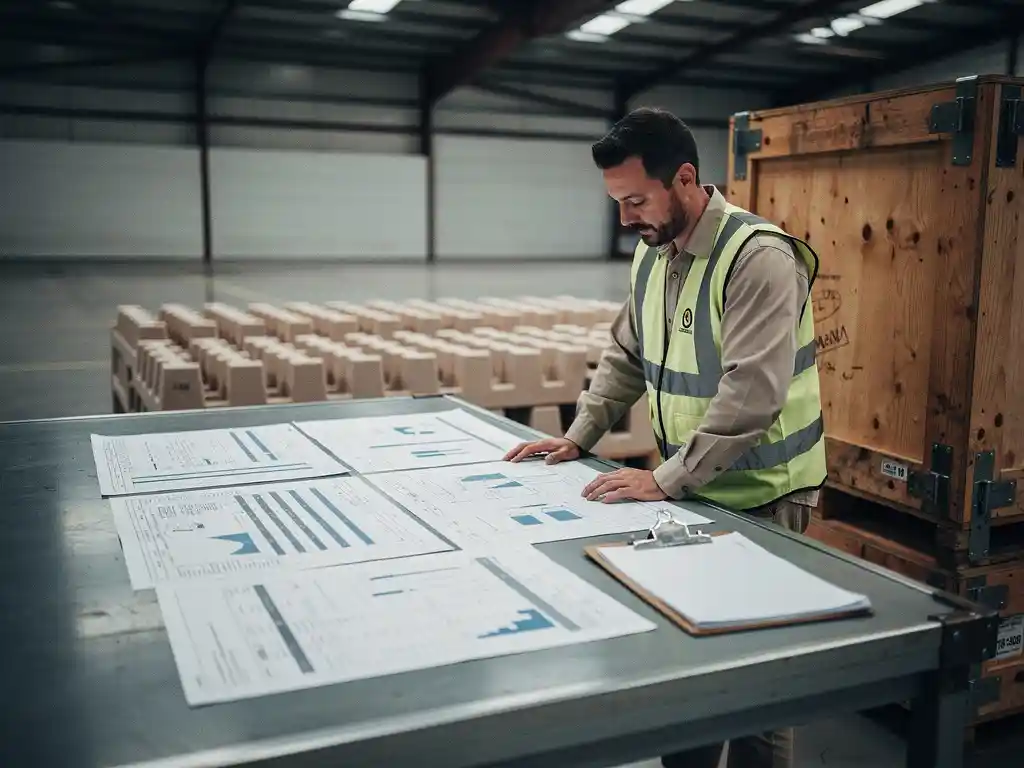
Hidden packaging costs are eating into your margin — discover how TCO thinking can transform your supply chain.
Your logistics costs are rising, but the invoices look the same as always. That is exactly the problem with hidden costs in the supply chain: they exist, but you won’t find them on a single line item.
Total cost of ownership in the supply chain goes beyond purchase price or shipping costs. It covers everything a product, package, or process truly costs you — from design to disposal. Anyone who leaves that out of the equation is flying blind.
Most logistics managers know what they pay for packaging materials. But do you also know what you pay for damaged products in transit? For returns that need to be repackaged? For line stoppages caused by packaging that doesn’t fit?
These are the cost items that rarely appear in a quote, yet still eat into your bottom line:
Each of these is a hidden cost. Together, they determine your true total cost of ownership in the supply chain — not the price per box.
TCO is not an accounting concept. It is a strategic management tool that helps you make decisions based on the full cost picture, not just the purchase price.
In a complex supply chain involving international shipments, variable volumes, and strict regulations such as ADR, UN, or MIL-STAN standards, this distinction is critical. A cheaper package that fails one in ten times costs more than a more expensive package that performs every time.
Organizations that take TCO seriously as a management tool look at:
Having this overview leads to better purchasing decisions, better partner selection, and better investments in packaging solutions.
Standard packaging is designed for the average situation. But your product, your logistics chain, and your customer are not average.
Custom packaging is tailored to exact dimensions, weights, protection requirements, and transport conditions. That may sound more expensive. But the reality looks different when you consider the full chain.
What custom packaging concretely delivers:
In sectors such as high-tech, medical, and defense — where components are extremely valuable or sensitive — this is not a luxury. It is a necessity that pays for itself directly in TCO.
Single-use packaging has a low purchase price and a high true cost. You pay every time, you generate waste, and you build no lasting value.
Circular packaging turns this model around. By designing for reuse, repair, and recycling, you significantly reduce the cost per cycle as the packaging is used more frequently.
The benefits of circular packaging in your TCO calculation:
Sustainability and cost savings are not opposites here. They reinforce each other when packaging is designed by design for multiple lifecycles.
Most organizations treat packaging as a necessary evil: something that costs money and should be as cheap as possible. That is precisely the misconception that keeps TCO unnecessarily high.
Packaging is the last thing protecting your product before it reaches the customer. It is the first physical impression your customer has of your quality. And it is a link in your logistics chain that directly affects efficiency, compliance, and cost.
When you treat packaging as a strategic asset, the question shifts from “what does this cost?” to “what does this deliver?”:
This is the mindset that makes the difference between packaging as a cost item and packaging as a competitive advantage.
Mapping your true packaging TCO is not a simple calculation. It requires insight into your entire chain: from design and production to storage, transport, returns, and disposal.
Faes helps you gain that insight and translate it into concrete improvements. As a full-service packaging partner with expertise in high-tech, medical, defense, and security sectors, we understand the challenges you face.
What you get when you work with Faes:
With Packaging Management from Faes, you don’t just take packaging off your plate — you optimize your entire packaging chain: from inventory management and fulfillment to return logistics and maintenance.
Want to know what your true packaging TCO is and where the greatest gains can be made? Contact Faes and discover how smarter packaging can make your supply chain stronger and more cost-effective.


Robert Verboven is Sales Manager at Faes and advises customers on smart packaging solutions within the industry. He translates complex packaging needs into practical solutions that contribute to a more efficient supply chain.
More articles by Robert VerbovenGood packaging doesn’t happen by chance. Using a proven process, our specialists guide you step by step from the initial idea to the final product.