


Theme:
TCO calculation for custom packaging: a step-by-step guide for procurement teams
Cheaper standard packaging? A TCO calculation tells a very different story about your actual costs.
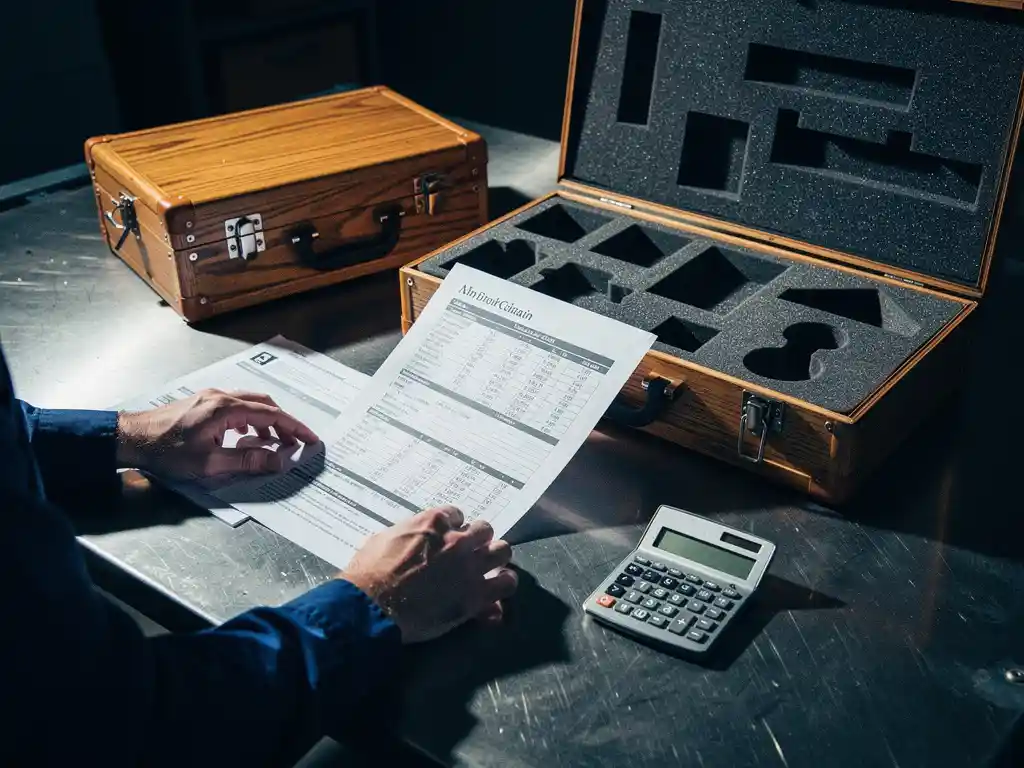
Cheaper standard packaging? A TCO calculation tells a very different story about your actual costs.
You’ve received a quote for custom packaging. The price is higher than your standard packaging. So you go with the cheaper option.
But is that choice really cheaper? A TCO calculation often tells a very different story.
The purchase price is just one part of what packaging actually costs you. Procurement teams that focus solely on purchase price are missing a large piece of the picture.
Standard packaging comes with costs that only become visible later:
For sectors such as high-tech, medical, and defense, these costs are far from abstract. A damaged component in a precision instrument or non-compliant packaging in an ADR shipment has direct operational and financial consequences.
A TCO calculation for packaging maps out all costs across the full lifecycle of a package — not just the purchase, but the entire journey.
A complete TCO analysis looks at:
Only when you add all these elements together do you see what packaging truly costs you per cycle, per shipment, or per year.
Custom packaging is designed around your product, your process, and your supply chain. This delivers advantages across multiple cost areas simultaneously.
Where standard packaging is generic, custom packaging provides:
The result is that the higher initial investment in custom packaging pays for itself in practice through lower costs throughout the rest of the supply chain.
A TCO calculation is only as reliable as the assumptions underlying it. Generic calculation models lack the specific context of your products, processes, and sector.
Accurate calculations require knowledge of:
Without that knowledge, you’re working with assumptions that can distort the true costs. This leads to decisions that look sound on paper but turn out to be more expensive in practice.
Procurement teams considering a switch to custom packaging often encounter recurring objections. These are understandable, but they deserve an honest answer.
“The initial investment is too high.”
A solid packaging project starts with a thorough analysis, but that doesn’t have to take months. Experienced engineers can move quickly, especially when requirements are clearly defined.
“We don’t know whether custom packaging is right for us.”
Custom packaging isn’t only worthwhile at high volumes. Particularly with expensive or sensitive products, the value of protection outweighs volume considerations.
Faes brings more than thirty years of experience in industrial custom packaging for the high-tech, medical, and defense sectors. That expertise translates into concrete, sector-specific TCO analyses that go beyond generic calculation models.
Through Faes’s Packaging Management service, you gain access to a complete end-to-end process:
Faes doesn’t operate as a vendor selling a product, but as a partner that structurally optimizes your packaging process — from the initial analysis through to operational execution.
Want to know what your packaging is really costing you? Contact Faes and start with a TCO analysis tailored to your situation.
A TCO calculation doesn’t have to start out complex. It begins with asking the right questions about your current situation.
Take the first step by gathering the following information:
With that information, you can form an initial picture of where the largest cost drivers lie. And that’s exactly where a sound packaging strategy begins.
Switching to custom packaging is not a risk when you know the numbers. A TCO analysis gives you the evidence base to make a well-informed internal decision — without relying on assumptions or gut feeling.


Michel Prins is Account Manager at Faes and a specialist in Safety & Security. Thanks to his background at the Ministry of Defense and years of experience in the sector, he advises organizations on reliable packaging solutions for critical applications. He combines practical knowledge with technical expertise to package sensitive equipment safely and efficiently.
More articles by Michel PrinsGood packaging doesn’t happen by chance. Using a proven process, our specialists guide you step by step from the initial idea to the final product.