


Theme:
TCO analysis for packaging: how to choose the best solution for your organization
Hidden packaging costs are eating into your margin — a TCO analysis reveals the true cost picture.
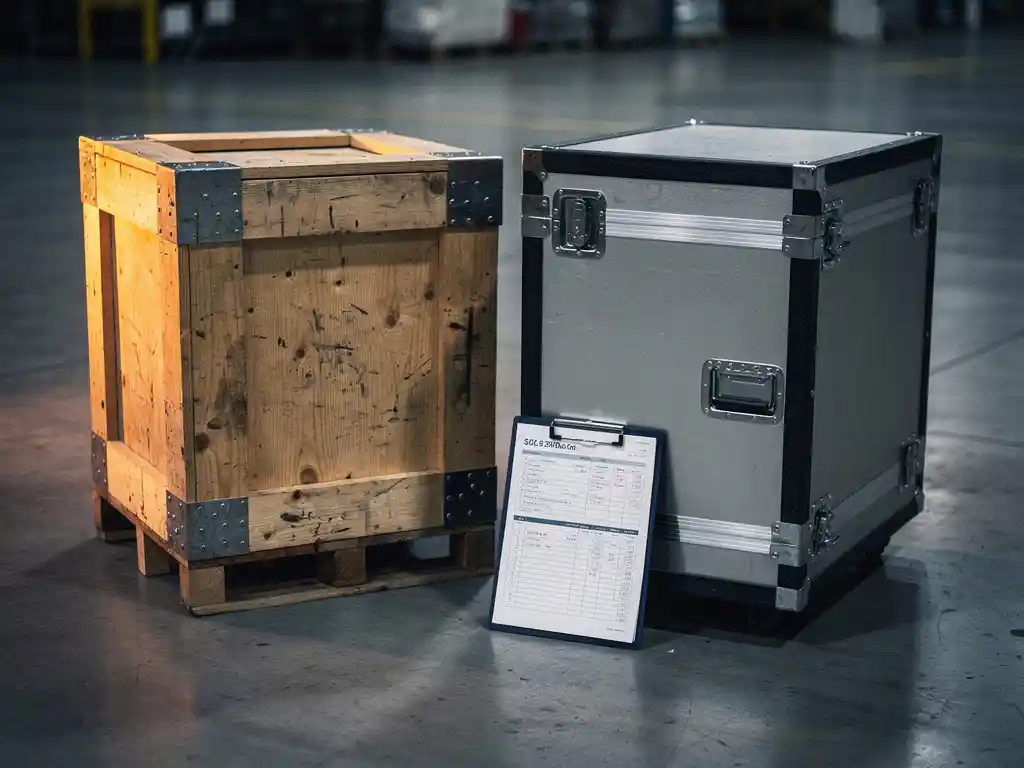
Hidden packaging costs are eating into your margin — a TCO analysis reveals the true cost picture.
You pay for your packaging every month. But do you know what it’s really costing you?
The purchase price is just the tip of the iceberg. Storage, returns, damage, replacement, compliance, and inefficient processes all add up. A TCO analysis makes those hidden costs visible, so your packaging decisions are based on actual value — not just price.
A cheap packaging solution feels appealing — until you see the bill for a damaged component, a delayed shipment, or a returns flow nobody accounted for.
In sectors like high-tech, medical, and defense, the stakes are high. A component from ASML or a medical instrument from Medtronic that arrives damaged costs far more than the packaging itself. Think downtime, remanufacturing, reputational damage, and compliance risks.
Costs that rarely factor into a standard packaging decision:
Only when you factor in all of these elements do you see the true cost picture.
TCO stands for Total Cost of Ownership: the total cost over the full lifecycle of a packaging solution. A TCO analysis looks beyond the purchase price and maps all relevant costs.
A complete packaging TCO analysis covers:
The result is a clear overview that shows where you’re losing money and where you can save without compromising on quality or protection.
For organizations with international shipments, variable volumes, or complex return flows, a TCO analysis is not a luxury. It’s a strategic tool that transforms packaging from a cost center into a manageable, optimizable factor in your supply chain.
Faes works with organizations that have high standards. That requires more than a standard cost calculation.
The process begins with a thorough analysis of your current packaging operation: what are you shipping, under what conditions, how frequently, and via which routes? From there, all relevant cost factors are mapped out — including ones you may not have considered yet.
What you get from a TCO analysis with Faes:
Digital tools such as PackAssist and StackAssist support this process. They make it possible to optimize packaging designs and stacking patterns before anything is produced, with a direct impact on transport and storage costs.
Sustainability and cost savings are often seen as opposites. In practice, they reinforce each other.
Reusable packaging requires a higher initial investment, but delivers structural savings over its entire lifecycle. Less waste, lower replacement costs, less logistical overhead — all of which show up in the TCO.
Circular packaging principles that directly contribute to a lower TCO:
For organizations that also need to meet sustainability targets or ESG reporting requirements, a circular packaging strategy offers a dual benefit: lower costs and demonstrable environmental performance.
A TCO analysis makes this tangible — not as an ideological argument, but as a financially grounded business case.
Want to know what your packaging is really costing you? And where the greatest opportunities lie to save without compromising on quality or protection?
Faes is a Dutch family-owned company with years of experience in custom industrial packaging for high-tech, medical, defense, and security organizations. As the official European distributor of SKB and a partner to organizations such as ASML, Medtronic, and defense agencies, Faes combines technical expertise with a pragmatic, solution-driven approach.
What you can expect:
Through packaging management, Faes offers a complete end-to-end solution: from design and production to inventory management, return logistics, and fulfillment. All under one roof, tailored to your industry and requirements.
Get in touch with Faes and discover what a TCO analysis can do for your organization.


Robert Verboven is Sales Manager at Faes and advises customers on smart packaging solutions within the industry. He translates complex packaging needs into practical solutions that contribute to a more efficient supply chain.
More articles by Robert VerbovenGood packaging doesn’t happen by chance. Using a proven process, our specialists guide you step by step from the initial idea to the final product.