


Theme:
How to measure the total cost of ownership of packaging across multiple supply chain links
Cheap packaging, most expensive solution? Calculate the real TCO across your entire supply chain.
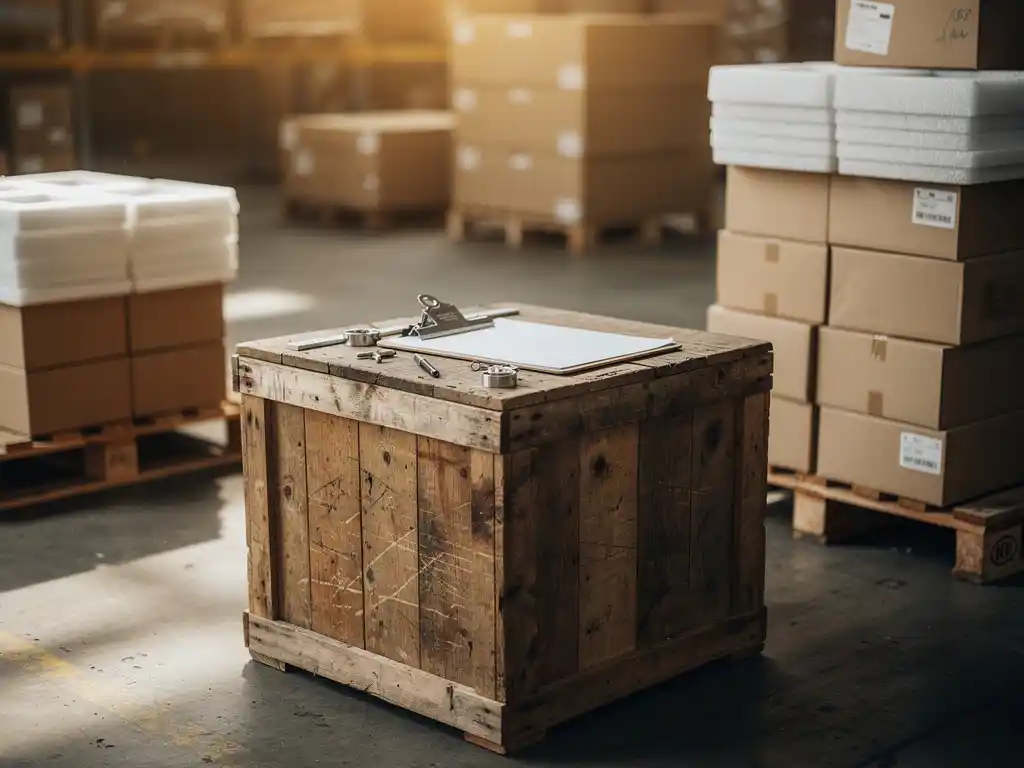
Cheap packaging, most expensive solution? Calculate the real TCO across your entire supply chain.
The total cost of ownership (TCO) of packaging is measured by mapping all costs incurred from design through end of life, distributed across every link in the supply chain. That means adding up the purchase price, logistics costs, damage risk, return flows, storage, and disposal — then weighing them against the value of the product being protected. For companies in high-tech, medical, or defense sectors, this distinction is critical, because cheap packaging can in practice turn out to be the most expensive solution. This article answers the most frequently asked questions about TCO calculation for industrial packaging.
Beyond the purchase price, costs include transportation, storage, packaging labor, damaged products, return logistics, maintenance, and waste disposal. For industrial packaging in complex supply chains, these hidden cost items often account for a larger share of the true cost than the purchase price itself.
Many procurement departments compare packaging purely on unit price. That is understandable, but it structurally leads to an underestimation of the true costs. The purchase price is merely the tip of the iceberg. Once packaging leaves the factory, a series of cost items begins that are rarely attributed to the packaging decision:
For sectors working with sensitive or high-value components — such as semiconductors, medical equipment, or military hardware — the costs of damage and loss are especially significant. Packaging that protects a component worth tens of thousands of euros may justifiably cost considerably more than a standard cardboard box, as long as the TCO across the full chain comes out lower.
The TCO of packaging is calculated by identifying, quantifying, and summing all direct and indirect costs at each supply chain link. This covers at minimum the following links: production and packing, internal transport, storage, outbound transport, use at the recipient’s site, and return or disposal.
A structured TCO calculation works best when the supply chain is broken down into individual links, with the following questions asked at each one: what actions take place here involving the packaging, who carries them out, how much time do they take, and what are the risks?
Start with an overview of the packaging’s complete journey: from the moment a product is packed to the moment the packaging is discarded or returned. Typical links include: packing at the manufacturer, internal warehouse, outbound transport, customs or intermediate storage, delivery to the customer, on-site use and storage, and the return flow.
Attach the relevant cost items to each link: labor costs, transport rates based on weight and volume, storage costs per day, damage probability multiplied by product value, and disposal costs. For reusable packaging, also include the costs of cleaning, inspection, and repair. By doing this per link, you can see exactly where the packaging adds the most value — or creates the most cost.
For companies with international shipments or complex return flows, it is advisable to also factor in currency exchange risks, customs costs, and any certification requirements. In sectors such as defense or medical, non-compliance costs can exceed all other cost items combined.
Single-use packaging has a low purchase price but generates full material and disposal costs with every use. Reusable packaging requires a higher initial investment, but those costs are spread across multiple cycles — meaning the TCO per use is significantly lower with sufficient rotation.
For most industrial applications, the break-even point falls between five and ten usage cycles, depending on the complexity of the packaging, the transport distance, and the cost of return logistics. The higher the value of the packed product and the greater the damage risk, the faster reusable packaging pays for itself.
Single-use packaging does have advantages in specific situations: for exports to destinations without a return flow, for products with highly variable dimensions, or when hygiene regulations rule out reuse. In the medical sector, for example, strict sterility requirements make reuse impossible in some cases.
With reusable packaging, you must also factor in management costs: who tracks how many units are in circulation, where they are, and when maintenance is needed? Without effective packaging management, the benefits of reusability are quickly eroded by loss, wear, or misuse.
The hidden costs that increase packaging TCO the most are: product damage from insufficient protection, inefficient packaging dimensions that waste transport space, high labor costs from cumbersome packing and unpacking, and return flows that have not been optimized.
Of these four cost items, product damage is typically the most severe. A dead on arrival (DOA) situation — where a product arrives damaged and must be replaced or repaired — generates direct costs through replacement or repair, as well as indirect costs through delays, customer dissatisfaction, and remediation work. In sectors where components cost tens of thousands of euros, a single DOA incident can exceed an entire year’s packaging investment.
Inefficient packaging dimensions are another underestimated cost driver. When packaging is too large for the product, you are paying for air. In air freight, where rates are based on volumetric weight, this can increase transportation costs by tens of percent. The same applies to pallet optimization: packaging that does not stack efficiently reduces the load factor of a truck and raises the cost per shipment.
Labor costs are rarely included in packaging comparisons, yet they are consistently present. Packaging that takes ten minutes longer to close, label, or open than an alternative quickly adds up to significant annual costs at high volumes.
Packaging design affects downstream logistics costs through three mechanisms: it determines stackability and load efficiency, it determines the level of protection and therefore the damage risk, and it determines how quickly and easily the product can be packed and unpacked at each link in the chain.
Packaging that is optimized for the full supply chain early in the design process saves costs in multiple places simultaneously. Consider a custom foam interior that holds the product precisely in place: it reduces damage risk, speeds up the packing process, and makes unpacking easier for the recipient. At the same time, a well-designed outer package can be engineered to stack efficiently on a Euro pallet, allowing more products to fit per truck.
In practice, packaging is still too often designed from a production or procurement perspective, without weighing the downstream costs. The result is that packaging which is cheap to produce creates additional handling, additional space requirements, or additional damage risk elsewhere in the chain. By treating packaging design as part of the logistics strategy — rather than an isolated procurement decision — companies can structurally reduce costs across the entire supply chain.
For international shipments, compliance also plays a role in design. Packaging for hazardous materials must meet ADR regulations, and military packaging must conform to MIL-STD standards. Building these requirements into the design from the outset prevents costly modifications or delays later in the process.
A higher investment in packaging is justified when the savings on damage, transport, labor, or return logistics outweigh the additional cost of the packaging over its expected lifecycle. The higher the product value, the more complex the supply chain, and the stricter the regulations, the sooner that break-even point is reached.
In concrete terms, a higher investment is almost always justifiable in the following situations:
A TCO analysis makes this clear by comparing the current costs of damage, labor, and transport against the cost of a better packaging solution. In many cases, an investment that initially appears expensive turns out to pay for itself within a year or two.
Faes offers industrial companies a concrete approach to reducing the total cost of ownership of their packaging — from initial design through return logistics. As a full-service packaging partner, Faes combines technical expertise with a broad range of services tailored to the specific challenges of the high-tech, medical, defense, and humanitarian aid sectors.
What sets Faes apart in TCO optimization:
Want to find out where the hidden costs in your packaging chain are and how to structurally reduce your TCO? Contact Faes for a no-obligation consultation. Together, we can map out which packaging solution delivers the greatest return across the full lifecycle.


Michel Prins is Account Manager at Faes and a specialist in Safety & Security. Thanks to his background at the Ministry of Defense and years of experience in the sector, he advises organizations on reliable packaging solutions for critical applications. He combines practical knowledge with technical expertise to package sensitive equipment safely and efficiently.
More articles by Michel PrinsGood packaging doesn’t happen by chance. Using a proven process, our specialists guide you step by step from the initial idea to the final product.