


Theme:
How do you calculate a reliable TCO for transport cases?
The purchase price is just the tip of the iceberg — discover how a complete TCO calculation reveals your true costs.
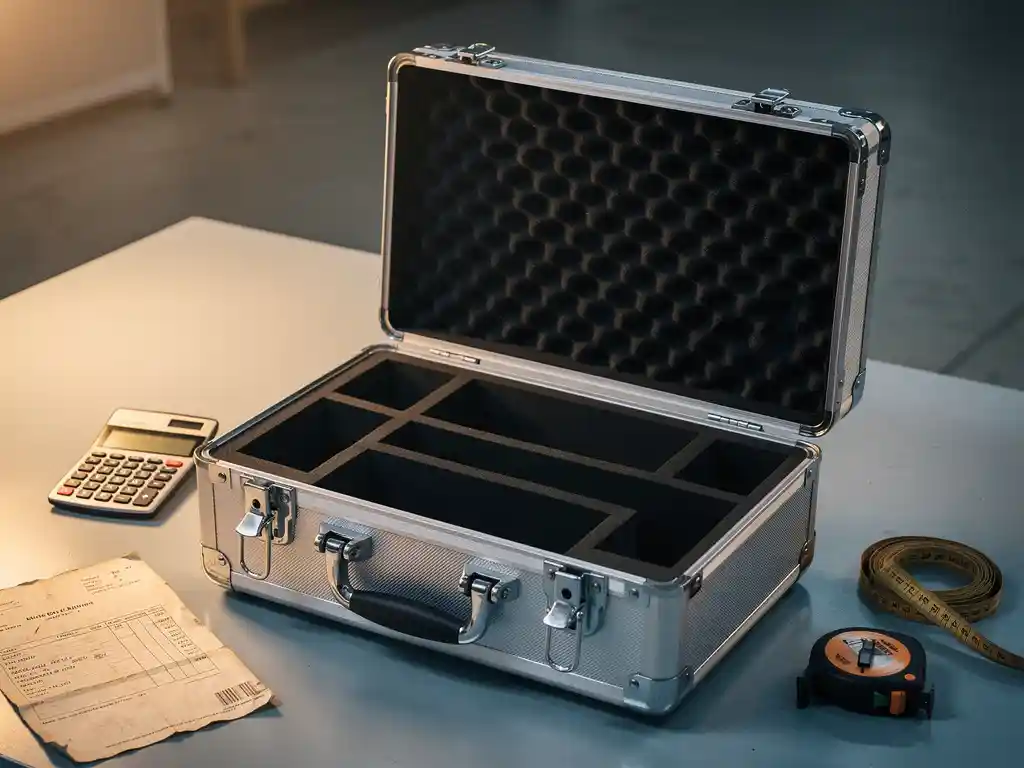
The purchase price is just the tip of the iceberg — discover how a complete TCO calculation reveals your true costs.
A reliable TCO calculation for transport cases requires mapping all costs across the full service life: purchase, maintenance, repairs, return logistics, product damage, and disposal. The purchase price is often the smallest part of the total picture. This article addresses the seven most frequently asked questions about TCO for transport cases, so you can make a well-informed decision.
A TCO calculation for transport cases covers all direct and indirect costs throughout the entire period of use. These fall into at least six categories: purchase price, maintenance and repair, logistics costs (transport and storage), product damage costs, administration and management, and residual value or disposal costs at the end of the service life.
Many companies overlook the indirect cost components. Consider the time employees spend inspecting, repairing, or tracking down cases — or the costs of poorly organized return logistics. All those hours count toward the true cost of a packaging solution.
An overview of the most common cost components:
Only when you add all these components together do you see what a transport case truly costs over its service life.
The purchase price is the one-time amount you pay when buying a case. The actual cost is the total of all expenditures over the case’s service life, including use, maintenance, and management. In practice, actual costs can run two to four times higher than the purchase price alone.
This difference is most apparent with low-quality, inexpensive cases. A case that is 30% cheaper to purchase but wears out twice as fast and requires more frequent repairs will cost more over three years than a higher-priced option with a longer service life and lower maintenance costs.
On top of that, a case that provides insufficient protection causes damage to the product inside. Those damage costs do not appear on the case’s invoice, but they absolutely belong in the TCO calculation. Particularly with high-tech components, medical equipment, or defense materiel, a single damaged shipment can already cost more than the purchase price of a higher-quality case.
The service life of a transport case is calculated based on the expected number of transport cycles, intensity of use, environmental conditions, and the case’s material specifications. A robust polypropylene or aluminum case can easily handle one hundred to two hundred cycles under normal use, while a simple cardboard solution is written off after a single use.
Start with the question: how often is the case used for transport each year? A case that ships weekly wears out faster than one used four times a year. Combine this with the type of transport: air freight places greater stress on a case than road transport, and international shipments introduce more environmental variables.
Material choice largely determines how long a case lasts. Cases with a reinforced frame, high-quality foam interior, and certified closures are designed for intensive use. Ask your supplier about the design criteria and testing standards — such as MIL-STAN or NEN standards — to support the expected service life with technical specifications rather than assumptions.
Product damage is often the largest and most underestimated cost component in the TCO of transport cases. If a case provides insufficient protection against shocks, vibrations, moisture, or temperature fluctuations, the damage costs to the product can be many times greater than any savings made on the packaging itself.
In sectors such as medical technology, defense, or high-tech manufacturing, the components involved can easily be worth tens of thousands to hundreds of thousands of euros. A single damaged part that must be reproduced, recertified, or reshipped generates direct costs and causes delays throughout the supply chain.
Include product damage in your TCO calculation by estimating:
By multiplying these three factors by the expected service life, you get a realistic picture of how much product damage contributes to the total cost of ownership.
A reusable transport case becomes cheaper than single-use packaging once the break-even point is reached: the moment at which the cumulative costs of single-use packaging exceed the higher purchase price of the reusable case. With regular use, this point is typically reached after just five to ten transport cycles.
The calculation is straightforward: divide the purchase price of the reusable case by the cost of a single-use packaging solution. The result is the number of cycles after which the reusable option becomes cheaper. Be sure to factor in the maintenance costs of the reusable case and the disposal costs of the single-use packaging.
Reusable cases are financially more attractive when:
At low frequency or with highly variable dimensions, single-use packaging may still be the better choice. The TCO calculation provides a clear answer in either case.
Sustainability costs are incorporated into a TCO calculation by quantifying both the direct environmental costs and the indirect financial risks. These include CO2 levies, waste processing costs, costs of complying with environmental regulations, and the financial impact of reputational risks associated with a poor sustainability profile.
In 2026, sustainability costs are becoming increasingly concrete due to regulations such as the Corporate Sustainability Reporting Directive (CSRD) and extended producer responsibility for packaging. Companies that fail to anticipate these developments risk higher compliance costs and fines in the near future.
Practical ways to incorporate sustainability into your TCO:
By treating sustainability not as a “soft factor” but as a concrete cost component, your TCO calculation provides a more realistic picture of total operating costs.
To start a TCO calculation for transport cases, you need at least five categories of data: the purchase price and specifications of the case, the expected usage (frequency and type of transport), historical damage and maintenance data, logistics costs, and the sustainability and compliance requirements applicable to your sector.
Don’t have all this data available? Start with estimates based on comparable situations and refine the calculation as you gather more data. A rough TCO calculation already provides more insight than a decision based purely on purchase price.
A practical checklist of required data:
Once you have this data in hand, you can calculate the total cost per transport cycle and compare it against alternatives. This makes a TCO calculation not only more reliable, but also directly useful in conversations with suppliers or when making internal investment decisions.
Faes helps companies in the high-tech, medical, defense, and security sectors not only manage packaging costs, but reduce them structurally. It starts with insight: by mapping the complete packaging chain — from design to return logistics — it becomes clear where the true costs lie and where savings can be achieved.
Through Packaging Management, Faes offers an end-to-end approach that addresses all relevant TCO components:
Faes combines technical expertise in UN, NEN, and MIL-STAN standards with years of hands-on experience in sectors where packaging is not a side issue but a critical link in the supply chain. Want to know what your transport cases truly cost and where the opportunities for savings lie? Contact Faes for a no-obligation conversation about your packaging strategy.


Michel Prins is Account Manager at Faes and a specialist in Safety & Security. Thanks to his background at the Ministry of Defense and years of experience in the sector, he advises organizations on reliable packaging solutions for critical applications. He combines practical knowledge with technical expertise to package sensitive equipment safely and efficiently.
More articles by Michel PrinsGood packaging doesn’t happen by chance. Using a proven process, our specialists guide you step by step from the initial idea to the final product.