


Theme:
How does logistics TCO differ from procurement TCO?
TCO in logistics and procurement measures other costs — discover which hidden items determine your profitability.
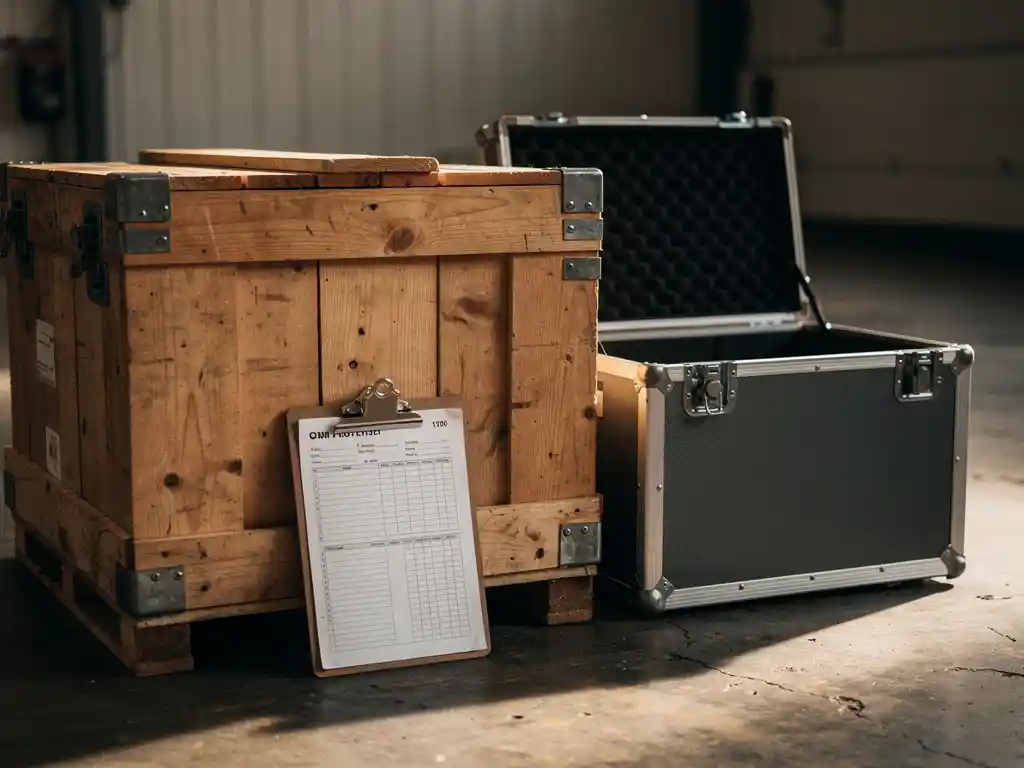
TCO in logistics and procurement measures other costs — discover which hidden items determine your profitability.
TCO in logistics and TCO in procurement both measure the total cost of a decision, but they look at fundamentally different cost components. Procurement TCO focuses on purchase price, supplier costs, and contract terms. Logistics TCO adds transportation, warehousing, packaging damage, return flows, and supply chain efficiency. For companies that ship expensive or sensitive products, the difference between the two approaches is what determines the true profitability of a decision.
In this article, we answer the most frequently asked questions about TCO in a logistics context, so you know exactly which costs you are accounting for — and which ones you may be overlooking without realizing it.
TCO in logistics stands for Total Cost of Ownership and encompasses all costs associated with physically moving, protecting, and managing goods throughout the supply chain. This goes beyond the invoice price of a package or a transportation service. It also includes indirect costs that only become visible when something goes wrong or when the supply chain is analyzed as a whole.
In a logistics context, the following cost components fall under TCO:
What sets logistics TCO apart is that it takes the entire lifecycle of a packaging solution or logistics decision into account — not just the moment of purchase. A cheap single-use package can, when viewed across the entire supply chain, end up being more expensive than a costlier reusable solution.
Procurement TCO focuses on the costs associated with selecting and contracting suppliers. Logistics often takes these costs as a given and only begins its analysis from the moment goods leave the factory. As a result, certain procurement-related cost components fall outside the logistics field of view.
Costs that procurement accounts for but logistics often does not:
Procurement therefore focuses heavily on the supplier relationship and the terms under which something is purchased. Logistics takes that as its starting point and analyzes what happens further down the supply chain.
Logistics TCO maps the operational costs that arise after a product or packaging solution has been purchased. These are costs that procurement rarely includes in its calculations, yet they significantly influence the true cost of a logistics decision.
Costs that logistics accounts for but procurement consistently misses:
It is precisely these hidden costs that make the difference between packaging that appears cheap and packaging that actually is cheap.
A low purchase price for packaging or a logistics service can increase total supply chain costs because cheaper solutions more often fall short in terms of protection, reusability, and efficiency. The savings on the purchase price are then more than offset by higher costs further down the chain.
This dynamic plays out in several ways:
A cheap single-use package without adequate cushioning or sealing provides less protection for a fragile product. When transporting electronic components, medical equipment, or precision instruments, a single instance of damage can wipe out all the savings made on the packaging. The costs of replacement, returns, re-inspection, and delays quickly exceed the initial cost savings.
A cheap disposable package may seem cost-effective per unit, but if you ship the same product a hundred times a year, you pay the purchase price a hundred times over. A more expensive reusable package that lasts ten years has a far lower TCO over its full period of use. On top of that, you avoid the disposal costs associated with single-use packaging materials.
For sectors such as defense, high-tech, or medical — where products regularly travel the same routes — this distinction is particularly relevant. The initial investment in a high-quality package pays for itself through lower operational costs, less damage, and a longer service life.
You calculate the true TCO of a packaging solution by adding up all costs over the full lifespan of the packaging and dividing by the number of use cycles. This gives you the cost per use, enabling a fair comparison between different options.
Follow these steps for a reliable TCO calculation:
Divide the total by the number of use cycles and you have the true cost per use. This figure is the basis for a fair comparison between a cheap single-use option and a more expensive reusable solution. In practice, the reusable option almost always wins at higher volumes and frequent shipment frequencies.
It pays to assess procurement TCO and logistics TCO together as soon as a packaging or transportation decision has a structural impact on multiple links in the supply chain. This is the case with recurring shipments, international routes, sensitive products, or complex return flows. An integrated TCO analysis prevents savings in one department from driving up costs in another.
Specific situations where a combined assessment pays off:
In 2026, a growing number of organizations in high-tech, medical, and defense are recognizing that the traditional separation between procurement and logistics leads to suboptimal decisions. An integrated approach — in which both disciplines apply the same TCO methodology — is the foundation for smarter, more cost-effective, and more sustainable packaging decisions.
Faes combines procurement knowledge and logistics expertise in a single integrated approach. As a full-service packaging partner, Faes looks not only at the purchase price of a package, but at the total cost over its full lifespan. That makes the difference for organizations that ship expensive, sensitive, or regulated products.
What Faes concretely offers for a complete TCO approach:
Want to know what your packaging solution truly costs over its full lifespan? Contact Faes for a tailored TCO analysis and discover where the real savings in your supply chain lie.


Robert Verboven is Sales Manager at Faes and advises customers on smart packaging solutions within the industry. He translates complex packaging needs into practical solutions that contribute to a more efficient supply chain.
More articles by Robert VerbovenGood packaging doesn’t happen by chance. Using a proven process, our specialists guide you step by step from the initial idea to the final product.