


Theme:
How do you reduce the total cost of ownership in a complex supply chain?
Hidden costs in your supply chain drive up TCO more than you'd expect — discover how your choice of packaging changes that.
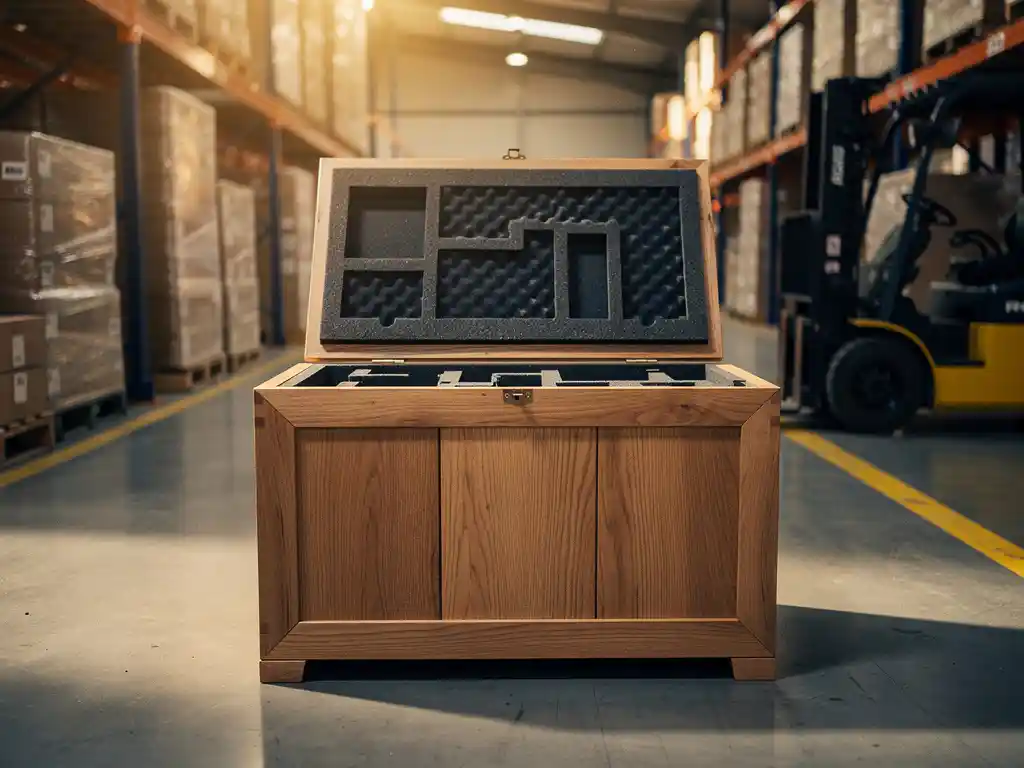
Hidden costs in your supply chain drive up TCO more than you'd expect — discover how your choice of packaging changes that.
You can reduce the total cost of ownership in a complex supply chain by looking beyond the direct purchase price of packaging and logistics. The real costs are hidden in damaged products, unnecessary shipments, unstructured return flows, and packaging that doesn’t fit the process. By taking a strategic approach to packaging management, you can achieve structural cost savings across the entire chain. In this article, we answer the most frequently asked questions about TCO optimization in the supply chain.
The hidden costs that drive up the total cost of ownership in a supply chain are found primarily in damage, waste, and inefficiency that don’t show up directly on an invoice. Think of products that arrive damaged (dead on arrival), packaging materials discarded after a single use, and unnecessary handling costs caused by poorly designed packaging. These are costs that only become visible when you analyze the entire chain.
In sectors such as high-tech, medical, and defense, these hidden costs are especially significant. A component that arrives damaged at ASML, or a medical device that fails to meet cleanroom requirements, doesn’t just result in direct replacement costs — it also causes downtime, rework, and reputational damage. The direct purchase price of packaging is therefore only a small part of the overall picture.
The most common hidden cost drivers in the supply chain are:
A TCO analysis therefore doesn’t start with the packaging supplier — it starts with the question: what does it cost when things go wrong? Only by mapping those costs can you identify where the real savings are to be found.
Packaging choice affects total supply chain costs at virtually every point in the chain: from production and storage to transport, handling, and returns. Packaging that appears inexpensive at first glance can significantly increase total costs through higher damage risk, more waste, or inefficient handling. Conversely, a more expensive custom packaging solution can substantially reduce TCO.
In concrete terms, packaging choice affects the following cost areas:
Packaging choice is therefore not an operational decision — it is a strategic one. Optimizing your packaging means simultaneously optimizing logistics costs, quality assurance, and the sustainability performance of the entire chain.
Single-use industrial packaging is designed for one shipment or one use and is then discarded or recycled. Reusable industrial packaging is built for multiple cycles and returns to the chain after each use. The fundamental difference lies in the cost structure: single-use has low initial costs but high recurring costs, while reusable has higher upfront costs but lower costs per cycle.
Single-use packaging such as corrugated cardboard boxes or wooden crates makes sense for low volumes, one-off shipments, or situations where return logistics are too complex or too costly. It is also practical when the destination has no means of returning packaging — for example, when exporting to distant locations. For standard products with no special protection requirements, single-use packaging is an efficient choice.
Reusable custom industrial packaging — such as flight cases, aluminum cases, or plastic crates — becomes compelling when dealing with structural, recurring flows. When a packaging solution is used twenty, thirty, or even a hundred times, the cost per cycle drops dramatically. Reusable packaging also typically offers superior protection, reducing the risk of product damage. For sectors such as defense, high-tech, and medical — where products are extremely valuable and vulnerable — reusable packaging is almost always the most cost-effective choice in the long run.
A sound TCO calculation does not compare purchase prices — it compares total costs over the expected service life of the packaging, including maintenance, return logistics, damage rates, and disposal costs.
You reduce transport costs through smarter packaging design by optimizing the dimensions and weight of the packaging for the specific mode of transport and making maximum use of available load space. Every centimeter of unused space in a container or truck costs money. Packaging that fits the load precisely and can be stacked reliably directly lowers the cost per shipment.
Concrete design principles that reduce transport costs:
Digital tools that simulate load space and calculate optimal stacking help inform the design process. With Faes’s StackAssist, packaging can be optimized for maximum load efficiency — with a direct impact on lower transport costs per shipment.
Standardizing packaging pays off when you are dealing with recurring flows of similar products, multiple suppliers or customers using the same packaging, or when the complexity of your current packaging range is driving up management and procurement costs. Standardization reduces TCO through economies of scale, lower inventory complexity, and more efficient processes.
Standardization is particularly worthwhile in the following situations:
At the same time, standardization has its limits. In sectors such as defense or medical, product or customer specifications can be so specific that custom solutions are unavoidable. The smart approach is a hybrid model: standardize where possible, apply custom solutions where necessary. This allows you to benefit from economies of scale without compromising on protection or compliance.
A common pitfall is standardizing around the cheapest option rather than the most cost-effective one over the full service life. Standardize on packaging that is proven to be robust, integrates well into the return flow, and is maintainable.
Data makes packaging costs transparent by tracking the complete lifecycle of a packaging solution: from procurement and use to return, maintenance, and disposal. Without data, you don’t know how many cycles a packaging unit actually completes, where packaging is being lost, or what costs are incurred per shipment. With these insights, you can implement targeted improvements and demonstrably reduce TCO.
Concrete data points that contribute to packaging optimization:
Digital packaging management systems make it possible to collect and analyze this data. This is not only valuable for cost reduction, but also for demonstrating sustainability performance — something that is increasingly required by major clients and public authorities.
Faes offers a complete end-to-end approach to packaging management focused on reducing the total cost of ownership in your supply chain. Not by simply supplying a package, but by analyzing and optimizing the entire chain. We do this with our own engineers, digital tools, and years of experience in demanding sectors such as high-tech, medical, defense, and humanitarian aid.
What Faes does for you in practice:
Want to find out where the hidden costs in your supply chain are and how to reduce them structurally? Contact Faes for a no-obligation conversation about your packaging strategy.


Michel Prins is Account Manager at Faes and a specialist in Safety & Security. Thanks to his background at the Ministry of Defense and years of experience in the sector, he advises organizations on reliable packaging solutions for critical applications. He combines practical knowledge with technical expertise to package sensitive equipment safely and efficiently.
More articles by Michel PrinsGood packaging doesn’t happen by chance. Using a proven process, our specialists guide you step by step from the initial idea to the final product.