


Theme:
How often should a procurement team conduct a TCO analysis?
Run a TCO analysis annually and whenever your supply chain changes — hidden packaging costs are greater than you think.
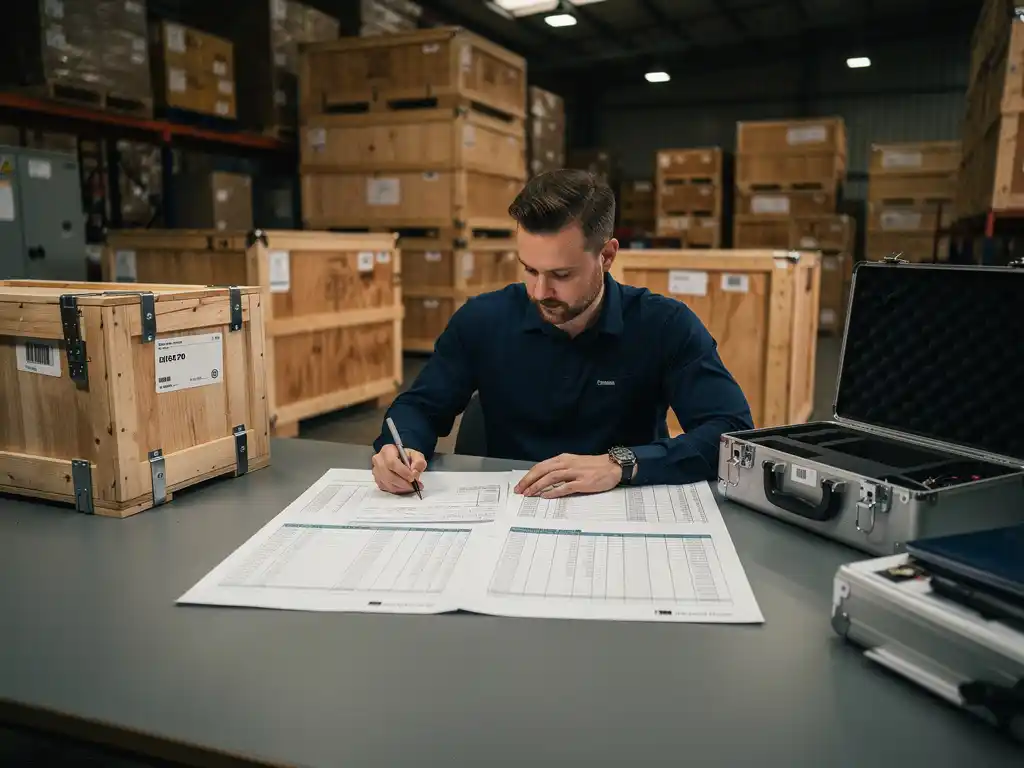
Run a TCO analysis annually and whenever your supply chain changes — hidden packaging costs are greater than you think.
A procurement team should ideally conduct a TCO analysis at least once a year, supplemented by an analysis whenever there is a significant change in the supply chain or packaging strategy. An annual review ensures that hidden costs — such as maintenance, return logistics, and damage — are identified in a timely manner. The appropriate frequency depends heavily on the dynamics of your industry and the complexity of your packaging solutions. In this article, we answer the most frequently asked questions about TCO analysis for packaging.
When you switch packaging partners, your TCO shifts on multiple levels simultaneously. Not only does the purchase price change, but transition costs, integration time, quality differences, and logistical adjustments all affect the overall cost structure. A switch may look cheaper on paper, but it often brings hidden one-time and recurring costs with it.
When changing partners, these are the cost items that change most significantly:
Switching partners is sometimes the right decision, but a full TCO analysis before making that decision is essential. Calculate not only what you save on unit price, but also what the switch itself costs over a period of at least two years.
A new TCO analysis is necessary whenever there is a structural change in your products, processes, markets, or supplier relationships. Do not wait until the end of the year if something fundamentally changes in your packaging chain in the meantime. Certain triggers make a re-analysis urgent.
These are the most important events that require a new TCO analysis:
A good rule of thumb: if more than two of these situations apply at the same time, a full re-analysis is not optional — it is a requirement.
Most professional procurement teams conduct a TCO analysis on an annual basis, combined with a quick interim check when relevant triggers arise. An annual analysis aligns with the budget cycle and provides a structured moment to identify hidden costs and evaluate supplier performance.
In practice, the frequency varies by industry and by the complexity of the packaging solution:
An annual TCO analysis is the minimum. But the real value lies in consistently tracking cost data throughout the year, so that the annual analysis becomes a confirmation of what you already know rather than a search for answers.
In a packaging TCO analysis, the purchase price and transportation costs are typically included, but a range of indirect and hidden costs are routinely left out. Yet those overlooked items are precisely what determine whether a packaging solution is truly cost-effective in the long run.
These are the cost items most often underestimated or forgotten:
A thorough TCO analysis therefore does not begin with the quote, but with a complete overview of all processes in which packaging plays a role — from engineering to disposal.
A price comparison looks exclusively at the purchase price of a packaging solution. A TCO analysis — or Total Cost of Ownership analysis — calculates all costs over the full lifecycle of the packaging, including use, maintenance, logistics, and disposal. The difference is fundamental: a price comparison can lead you to the cheapest option, which may ultimately prove to be the most expensive.
A price comparison is quick and straightforward: you compare quotes based on unit price, lead time, and minimum order quantity. This is useful for standard products with a short lifespan and few associated processes. For complex industrial packaging, a price comparison is structurally inadequate, because the purchase price typically represents less than half of the true total cost.
A TCO analysis maps all cost layers over a predefined period — often two to five years. This includes acquisition, engineering, transportation, storage, maintenance, return logistics, damage costs, and disposal. For reusable packaging, a TCO analysis shows that a higher initial investment pays for itself through lower operational costs over time. For single-use packaging, the opposite may be true. The TCO analysis provides the substantiation that a price comparison simply cannot offer.
You incorporate sustainability into a TCO analysis by explicitly quantifying the environmentally related costs and savings alongside the financial costs. Think of CO2 emissions, material consumption, waste costs, and the value of reuse. Sustainability is no longer a soft factor — it has direct financial consequences through regulations, customer contracts, and operational costs.
Here is how to concretely integrate sustainability into your packaging TCO analysis:
Including sustainability in your TCO analysis is not an ideological choice — it is a financially sound one. Organizations that invest today in circular and sustainable packaging solutions will avoid higher compliance costs down the line and benefit from lower operational expenses.
Faes supports procurement teams in conducting a thorough and objective TCO analysis for industrial packaging. Not with a standard calculation model, but with sector-specific expertise in high-tech, medical, defense, and security industries — where packaging must meet demanding requirements and hidden costs can be substantial.
What Faes offers in practice:
Want to know what your packaging solutions truly cost over their full lifecycle? Contact Faes to discover where the hidden costs lie and how to structurally reduce them.


Michel Prins is Account Manager at Faes and a specialist in Safety & Security. Thanks to his background at the Ministry of Defense and years of experience in the sector, he advises organizations on reliable packaging solutions for critical applications. He combines practical knowledge with technical expertise to package sensitive equipment safely and efficiently.
More articles by Michel PrinsGood packaging doesn’t happen by chance. Using a proven process, our specialists guide you step by step from the initial idea to the final product.