


Theme:
How does a TCO analysis differ for custom versus standard packaging?
Standard packaging actually costs 2–3x more — discover how a TCO analysis proves it.
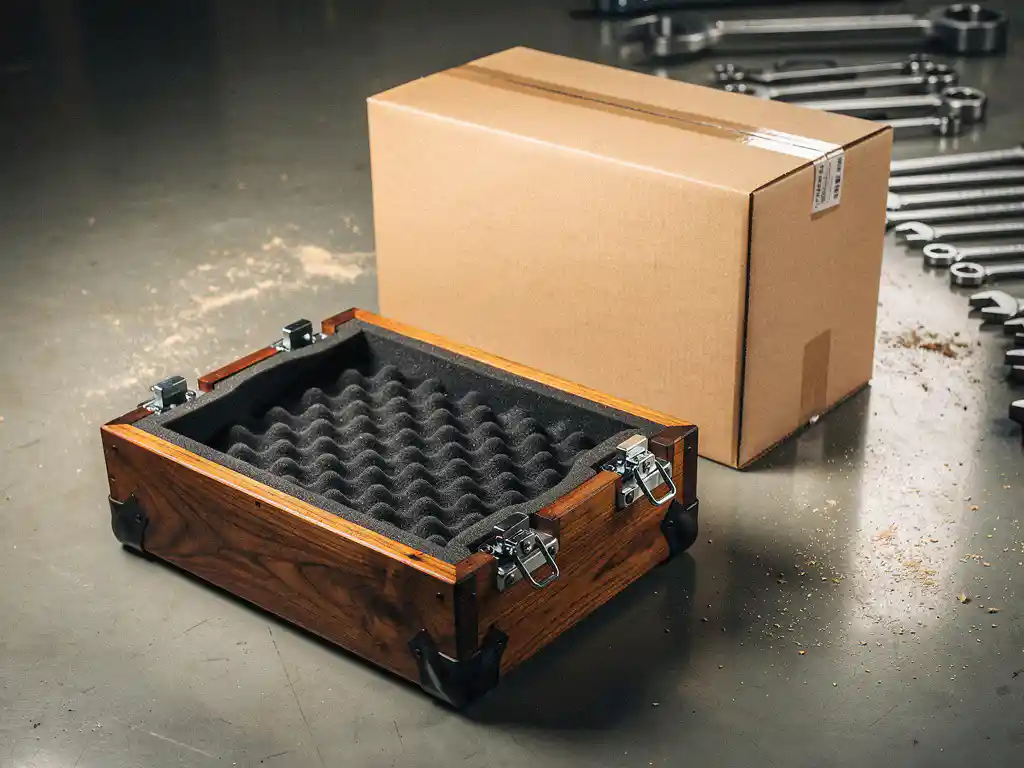
Standard packaging actually costs 2–3x more — discover how a TCO analysis proves it.
A TCO analysis for custom packaging consistently reveals lower total costs than a comparison based on purchase price alone. Standard packaging may appear cheaper to buy, but conceals costs related to damage, rework, returns, and compliance. Custom packaging requires a higher initial investment that pays for itself through reduced damage, a longer service life, and more efficient logistics. In this article, we answer the most frequently asked questions about TCO and packaging choices.
Standard packaging almost always carries hidden costs that only become visible when you map out the entire supply chain. The purchase price is low, but the real costs lie in product damage, excess material consumption, unnecessary labor hours, and compliance risks — all of which are structurally higher with standard solutions.
The most common hidden costs are:
When you add all of these costs together, the true cost of standard packaging is often two to three times higher than the purchase price suggests.
Calculating the TCO of custom industrial packaging involves summing all costs over the full service life of the packaging, divided by the number of use cycles. This includes design and engineering costs, production costs, use and maintenance, return logistics, and ultimately disposal or recycling.
Start with a complete overview of both direct and indirect costs. Direct costs include the investment in design, production, and materials. Indirect costs include storage, transport, labor hours for packing and unpacking, damage to contents, maintenance, and return logistics.
A custom industrial packaging solution — such as a flight case or custom wooden crate — can last for dozens of cycles with proper maintenance. Divide the total investment by the expected number of trips to calculate the cost per use. This figure provides a fair basis for comparison against single-use packaging.
A TCO calculation is only complete when you also account for the costs you don’t incur thanks to custom packaging: less product damage, less rework, lower material consumption, reduced shipping costs through optimal use of load space, and fewer compliance risks. These avoided costs are often the biggest driver of the business case for custom packaging.
Custom packaging pays for itself as soon as the sum of avoided costs and extended service life exceeds the higher initial investment. In practice, this is almost always the case within a limited number of cycles when packaging is used repeatedly, when product values are high, or when strict compliance requirements apply.
A few concrete situations where the payback period is short:
The payback period is shortest when high product value, high volume, and recurring use are combined. For one-off shipments of low-value products, custom packaging is rarely the most economical choice.
The TCO differences between custom and standard packaging vary significantly by sector, depending on product value, transport conditions, and compliance requirements. The TCO advantages of custom packaging are greatest in high-tech, medical, and defense sectors. In less regulated sectors with low-value products, the difference is smaller.
Companies transporting precision equipment and sensitive components operate under strict requirements for vibration, electrostatic discharge, and cleanliness. A standard package that damages or contaminates a component can cost many times the packaging investment. Custom packaging with precisely cut foam interiors and anti-static materials eliminates that risk almost entirely.
Medical devices and instruments must arrive clean, free from contamination, and intact after transport. Sterile packaging, traceability, and documentation are not optional — they are requirements. The TCO of a standard package that fails during a critical delivery is incalculable: think surgical delays, liability claims, or product recalls.
Defense and security sectors operate under MIL-STAN standards and transport equipment under extreme conditions. Packaging must withstand shocks, vibrations, water, and temperature fluctuations. The consequences of a packaging failure here are not only financial but also operational and safety-critical.
Reusability is the most powerful cost-reduction factor in a packaging TCO analysis. Every additional cycle a package completes lowers the cost per use while simultaneously reducing material costs, waste disposal costs, and the environmental impact of the packaging process.
A reusable custom package carries a higher purchase price, but that investment is spread across all cycles. Single-use packaging incurs a new cost every time. After ten cycles, the cost per use of a reusable package is already ten times lower than that of a single-use alternative — before accounting for savings on materials and disposal.
Reusability also offers indirect benefits:
Return logistics is a cost item that must be included in the TCO: reusable packaging needs to be collected, inspected, and repaired where necessary. These costs are manageable, but must not be overlooked in the calculation.
The most common mistake in a packaging TCO analysis is comparing purchase price alone. Companies look at the price per unit or per box and choose the cheapest option, without factoring in the full lifecycle, damage rates, labor costs, and compliance risks.
Other common mistakes include:
A sound TCO analysis requires collaboration between procurement, logistics, quality, and finance. Only when all of these perspectives are included do you get an accurate picture of the true cost of packaging.
Faes supports companies in the high-tech, medical, defense, and security sectors in conducting a thorough, complete TCO analysis for their packaging challenges. This doesn’t start with selecting a package — it starts with understanding the full chain: what are you shipping, how often, under what conditions, and what requirements apply?
What Faes specifically offers:
Want to know what your packaging truly costs and where the greatest savings opportunities lie? Contact Faes for a no-obligation conversation about your packaging strategy.


Michel Prins is Account Manager at Faes and a specialist in Safety & Security. Thanks to his background at the Ministry of Defense and years of experience in the sector, he advises organizations on reliable packaging solutions for critical applications. He combines practical knowledge with technical expertise to package sensitive equipment safely and efficiently.
More articles by Michel PrinsGood packaging doesn’t happen by chance. Using a proven process, our specialists guide you step by step from the initial idea to the final product.