


Theme:
How does storage management affect the TCO of packaging logistics?
Inefficient storage management invisibly drives up your logistics TCO — discover how to structurally reduce packaging costs.
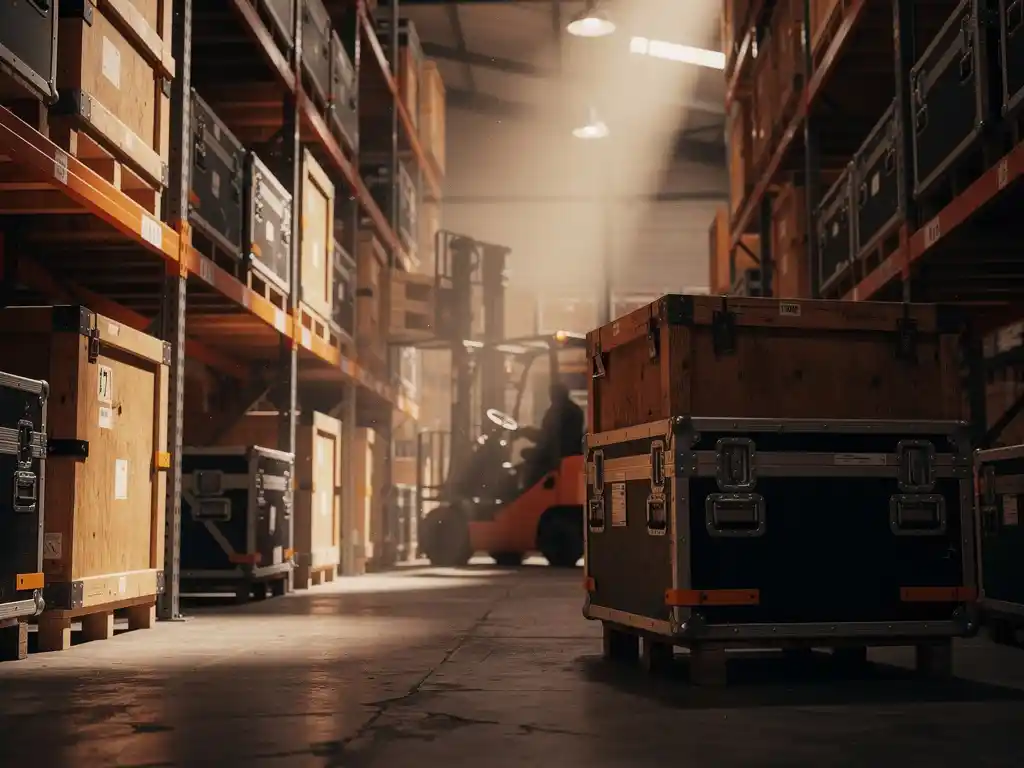
Inefficient storage management invisibly drives up your logistics TCO — discover how to structurally reduce packaging costs.
Storage management has a direct and often underestimated impact on the logistical TCO of packaging. Inefficient storage not only increases space costs, but also drives up handling costs, damage costs, and return logistics expenses. The total cost of ownership of a packaging system is therefore far more than just the purchase price. In this article, we answer the most frequently asked questions about how storage management determines logistical TCO and what you can do to structurally reduce those costs.
The logistical TCO of industrial packaging encompasses all costs across the full lifecycle of a package: acquisition, use, storage, maintenance, return logistics, and eventual disposal or recycling. The purchase price is often only a small portion of the actual total cost. Those who focus solely on the purchase price miss the largest part of the cost picture.
The main cost factors are:
Particularly in sectors such as defense, medical technology, and high-tech industry, these costs add up quickly. Transporting sensitive components under extreme conditions requires packaging that protects against shocks, vibrations, moisture, and temperature fluctuations. Packaging that fails to meet these requirements leads to damage — and consequently to far higher indirect costs than the packaging itself was ever worth.
Inefficient storage management increases logistical costs in several ways simultaneously: greater space usage, more handling movements, a higher risk of damage, and less visibility into available inventory. Each of these factors drives up costs throughout the total logistical TCO of your packaging system.
A common problem is that empty packaging is stored without structure, causing it to take up a disproportionate amount of space. An empty wooden crate or a non-nested flight case can occupy just as much floor space as when it is full. When you manage dozens or hundreds of such packages, storage costs quickly escalate without any value being created.
Poor administration of packaging inventory also leads to losses and duplicate purchasing. If you do not know how many packages are available, where they are located, and what condition they are in, you will unnecessarily order new packaging while usable units sit waiting somewhere in the warehouse. This is a classic TCO pitfall that occurs at many companies in practice.
Inefficient storage also increases the risk of damage. Packaging that is not stacked or stored correctly gets damaged before it has even been put into use. For custom industrial packaging, repair or replacement costs are significant. In sectors such as defense or medical technology, damaged packaging can also mean that a shipment fails to meet applicable standards, leading to delays and additional costs.
Single-use packaging has lower initial storage costs, but structurally generates more waste volume and higher disposal costs. Reusable packaging requires more storage space for empty return packaging, but delivers lower logistical TCO costs over the long term — provided the return and storage process is well organized.
Single-use packaging such as cardboard boxes or wooden crates for one-time use is inexpensive per unit and takes up little storage space after use because it is disposed of. Yet the total costs over a longer period are higher than they appear. You pay for materials every time, you generate waste streams that need to be processed, and you build no reusable capital in your packaging fleet.
Reusable industrial packaging such as flight cases, racks, and custom plastic or wooden crates requires an active return and storage process. Empty packaging must be received, inspected, repaired if necessary, and stored until the next use. This demands space and organization. But when that process is well structured, the cost per use decreases significantly over the packaging’s lifecycle. This model also aligns with circular packaging principles, which is becoming increasingly relevant for companies pursuing sustainability goals.
The choice between single-use and reusable packaging is therefore not purely a financial consideration, but an operational one as well. Reusable packaging yields the greatest returns at high volumes, fixed routes, and well-organized return logistics.
Smart stacking and nesting reduce storage costs by drastically cutting the space used by empty packaging. Packaging designed to nest together or stack efficiently can take up tens of percent less storage space than non-optimized alternatives. This has a direct positive impact on logistical TCO.
Nesting means that empty packages are slid into one another, so that multiple units occupy the space of a single filled package. This principle is particularly valuable for return packaging and for companies managing large numbers of packages. Think of plastic crates, pallet boxes, or standardized industrial containers specifically designed with nesting in mind.
Stackability plays a similar role: packaging that can be stably stacked on top of one another makes better use of the vertical space in a warehouse. This is relevant for both filled and empty packaging. When designing custom industrial packaging, it is therefore wise to include stackability as a design requirement rather than an afterthought.
Digital tools can support this process. With a tool like StackAssist, you can calculate in advance how packaging can be optimally stacked on a pallet or in a container. This prevents wasted space during transport and storage, thereby reducing the cost per shipment.
An integrated packaging and storage strategy pays off as soon as the costs of fragmented management exceed the investment in a coordinated approach. That point is reached faster than you might expect: with varying volumes, international shipments, complex return flows, or strict compliance requirements, an integrated strategy is almost always more financially and operationally advantageous.
Companies that manage their packaging, storage, and logistics separately pay a hidden coordination premium. Every link in the chain optimizes for itself, but no one optimizes for the whole. The result is surplus inventory at one location and a shortage at another, unnecessary transport movements, and a lack of insight into the actual costs per packaging cycle.
An integrated approach connects packaging design, inventory management, return logistics, and maintenance into a single cohesive chain. This makes it possible to:
For sectors such as defense, medical technology, and high-tech industry, this approach is not only cost-saving but also necessary from a compliance perspective. Managing packaging that meets UN, NEN, or MIL-STAN standards requires a structured and documented process — something that is difficult to achieve without an integrated strategy.
Faes offers a complete end-to-end approach to industrial packaging that integrates storage management, return logistics, and process optimization into a single cohesive solution. This allows you to address not just acquisition costs, but the full logistical TCO of your packaging system.
Specifically, Faes offers:
Whether you operate in the defense industry, medical technology, or the high-tech sector: Faes thinks along with you throughout the entire packaging process, from design to return. That is the difference between a packaging supplier and a strategic packaging partner. Want to know what an integrated approach could mean for your organization? Discover the possibilities of Packaging Management at Faes and get in touch for a no-obligation conversation.


Michel Prins is Account Manager at Faes and a specialist in Safety & Security. Thanks to his background at the Ministry of Defense and years of experience in the sector, he advises organizations on reliable packaging solutions for critical applications. He combines practical knowledge with technical expertise to package sensitive equipment safely and efficiently.
More articles by Michel PrinsGood packaging doesn’t happen by chance. Using a proven process, our specialists guide you step by step from the initial idea to the final product.